What we do
at maxcontact
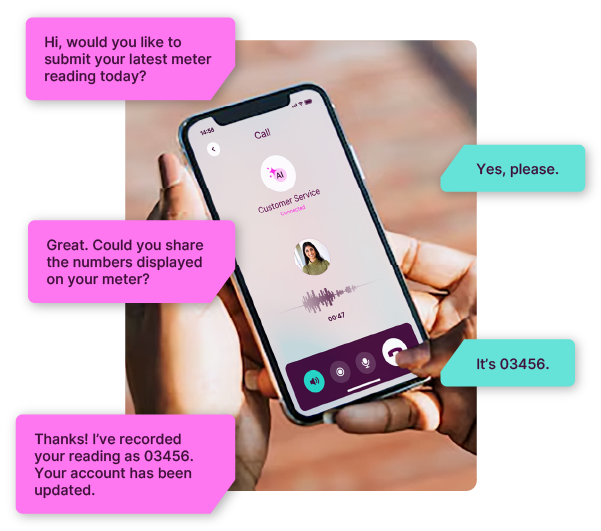
We’re the team behind the AI-powered customer engagement platform that’s transforming how businesses connect with their customers – turning every conversation into a revenue-driving moment.























%201_1.avif)















_logo.svg%201_1.avif)


%201_1.avif)


_logo.svg%201_1.avif)


.png)
careers at
maxcontact
Explore open positions and discover the wide range of opportunities across departments.
maxcontact's leadership team

Ben is CEO and co-founder of MaxContact, bringing over 20 years' experience helping businesses transform their customer engagement strategies. Since 2015, he's built MaxContact into one of the North's top 50 fastest-growing tech companies, creating innovative solutions that actually deliver on their promises.

Adam joined MaxContact as Chief Financial Officer in 2024, bringing extensive experience driving growth in high-growth technology companies. Prior to MaxContact, he was CFO at AppLearn, leading the business through its successful sale to Nexthink - demonstrating his track record of delivering results at board level.

.png)
Matt is VP of Engineering at MaxContact, leading Product Development and Operations with 20 years' experience across high-tech companies including Autotrader, AppSense and Ivanti. He's passionate about building high-performing engineering teams that deliver valuable solutions through a culture of continuous improvement and innovation.

Kayleigh joined MaxContact as Marketing Director in 2020, bringing extensive experience leading marketing teams across Greater Manchester's tech sector. She drives the company's growth and brand innovation through strategic marketing that delivers measurable results.

Jamie joined MaxContact as Operations Director in 2024, bringing 25 years' experience in technology and software companies. He's successfully led multiple businesses through growth and exits - including the sale of Logicalware to Puzzel - and now applies this expertise to optimise operations and drive sustainable growth at MaxContact.

Richard is Enterprise and Strategic Partner Director at MaxContact, bringing 15 years' experience advising businesses on contact centre solutions - from his early days as an advisor at RAC and Caudwell Communications to leadership roles. As a co-founder, he now identifies partners who share MaxContact's mission, building relationships that drive revenue and innovation across the business.
.png)
Richard joined MaxContact as VP of Sales in 2025, bringing a track record of delivering consistent double-digit growth across technology businesses. He's passionate about driving transformation and celebrating success - whether refining processes or leading large-scale change that benefits customers and teams alike.
.png)
Hannah joined MaxContact as Head of People, bringing extensive experience partnering with senior leaders in fast-growth and transformation environments. In her newly created role, she leads MaxContact's people strategy - spanning leadership development, organisational design, and performance frameworks - ensuring the people agenda directly enables the company's commercial ambitions.
our vision & mission
We're driven by a clear vision of what's possible and a mission that keeps us focused on delivering real value. This is what shapes everything we do.
"We saw a 400% to 425% increase in productivity just overnight when we moved from manual dialling to MaxContact's automatic dialling."

“From the outset, MaxContact understood what we wanted. They listened to what our concerns were and what we wanted the project to deliver for us”

"We're really pleased with MaxContact's platform. The ease of use and all information being readily available at the click of a button within the reporting suite is brilliant."

"MaxContact's support team is fantastic. They held our hand all the way through and made sure that we're happy with everything and helped us build the custom reports we needed."

"The MaxContact solution gives our teams the freedom to carry out their roles and flexibility to work securely in and out of the office, which has increased job satisfaction."

"The relationship we have with MaxContact, their own commitment to innovation and the fact they know our business has helped technology become a point of difference for us."

"From an efficiency perspective, we’ve definitely seen around twenty five to thirty percent uplift, just from utilising the MaxContact platform."

"We can now measure performance and productivity anytime, strategise effectively, and the wallboards and leaderboards add healthy competition our agents enjoy.”

"We’ve definitely seen a marked improvement in productivity, and we are starting to see financial benefits of having a fast reliable outbound dialler."

"Everyone says they've got your best interests at heart. Compared to the previous people we worked with, MaxContact have more of a desire to understand our business and therefore drive action that will impact change."

"Our revenue has at least tripled since using MaxContact, we were doing around 250 deals per month, now we've managed to achieve 1000 deals in a month - which is record breaking for any WorldPay partner."

“The live dashboards help me and my Team Leaders live monitor what the agents are doing at any moment in time, so we can support them if they are struggling.”

“We’ve increased contact rates with our customers, which has been massive. When you’re sourcing leads, you want to make sure your contact ratio is as high as possible, so that’s been a huge positive for us.”

"Our AI Agent helps us serve customers by providing instant responses and addressing queries efficiently. Gone are the times when customers had to wait 30 minutes to speak to a human."

“We outlined what we needed to performance manage, and MaxContact delivered the insights that help us monitor our service and spot areas for improvements across our team.”

"With MaxContact's conversation analytics, we can proactively support our agents and maintain complete oversight, so we never miss a critical moment or insight."

"Handling over 2,000 daily calls while providing an enhanced customer experience through intelligent automation and skilled team focus."

"Ultimately, the platform represents another symptomatic diagnostic tool to be used by clinicians to deliver the best possible care"

"The MaxContact customer engagement platform allows us to provide a cost-effective, reliable omnichannel service to our clients"

"I faced some delays in support response. However, the quality of the product makes it worth it."

our values
Our values shape everything - from how we build our product to how we support our customers.
Flexible by Design
Real-time assist, auto-QA, AI agent coaching and performance insights that help agents perform better, reduce compliance risk, improve quality instantly and create measurable ROI.
Medium length section heading goes here
Lorem ipsum dolor sit amet, consectetur adipiscing elit. Suspendisse varius enim in eros elementum tristique.
The evolution of MaxContact
Explore our early foundations and our impact on the call centre industry.

2025: Award-Winning Innovation
Launched our AI Agent platforms and were named Best Performing Company in Customer Relationship Management at the Megabuyte Emerging Stars Awards - recognition of our continued innovation and market leadership.

2023–2024: Innovation Accelerates
Secured further funding from NatWest and launched our Conversational Analytics platform - bringing AI-powered insights to customer conversations at scale.

2021: Backed for Scale
Secured private equity investment to accelerate growth. We passed 100 clients, 5,000 agents, and expanded our team to meet increasing demand.

2016–2018: Rapid Growth and Innovation
We scaled quickly, growing from 30 clients and 1,100 agents to 75 clients and 3,200 agents. During this time, we achieved BSI ISO 27001 certification and added omnichannel capabilities - transforming how businesses engage with their customers.

2001-2015: Built from Experience
Our founders spent over a decade working with third-party contact centre systems - selling, supporting, and building add-ons. Frustrated by poor functionality and limited freedom, they decided to build something better. After four years of development, MaxContact launched in 2015.
maxcontact by numbers
A snapshot of our team, our customers, and the satisfaction we deliver.
A talented team dedicated to delivering exceptional customer outcomes.
Our customers rate us highly because we deliver on our promises.
Trusted by businesses across the world to transform customer engagement.
Challenges we’ve solved
See how businesses like yours are turning conversations into measurable results with MaxContact.


As a leading Business Process Outsourcing (BPO) provider, Marston Holdings transformed their service delivery by implementing MaxContact’s versatile contact centre solution.


.avif)
Dudley Council implemented MaxContact’s dialler solution, transforming their rental income collection process. The integrated solution empowered the Lead Income team to manage operations more effectively, enhancing both team efficiency and service to the community.


Commercial insurance services provider, Compare My Insurance, were frustrated by their previous system which meant they weren’t dealing with customers efficiently and were missing out on opportunities. MaxContact’s solution has provided stability and reliability, boosting contact rates and efficiencies.
Ready to Engage
Smarter?
Supercharge your customer interactions with MaxContact’s powerful, AI-driven platform - built to scale with your business, keep your data secure, and deliver results that matter.

latest news
Our articles and industry insights give you expert perspectives, practical strategies, and the latest trends to help your business connect smarter and perform better.
After-call work isn’t an efficiency problem- it’s a trust problem.
After-call work isn't just a time drain - it's a trust problem. Discover how inconsistent CRM records erode customer loyalty, and how AI-generated call summaries close the loop.
Ask a contact centre leader about after-call work and they'll usually frame it as a time problem. Wrap time is too long. Agents aren't “going available” quickly enough. AHT is inflating. The fix, in most conversations, is operational: better templates, tighter ACW targets, more monitoring.
That framing is not wrong, but it is incomplete. After-call work is not just a time problem. It’s a quality problem, one which has a direct customer-facing cost that most operations are not measuring.
What actually happens when the call ends
The call ends. The agent is under pressure to “go ready” and be available for the next call in the queue. They have notes to write, a CRM record to update, a disposition to log. Often with multiple systems to update. They have approximately two minutes to do all of that before the queue moves. So, they write what they can. A sentence, maybe two. A shorthand that makes sense to them right now but will mean nothing to the agent who picks up next week's call. Sometimes nothing at all, and a disposition code carries the entire context of a complex interaction. Now multiply that across your team. Ten agents handling the same call type will leave ten different records. Some thorough, some minimal. Some missing the most important detail entirely - what was promised, what was escalated, what the customer was told to expect next. This is the quality problem, and it compounds quietly.

The customer pays for it twice
The first cost is visible: longer calls, higher AHT, agents unavailable for longer than they should be. This is what gets measured. The second cost is less visible but more damaging. The customer calls back. A different agent picks up. They open the record - and it tells them almost nothing useful. So, they ask the customer to explain themselves again. That moment - the repetition, the sense that the company was not paying attention - is where trust erodes. It’s not dramatic. It does not show up immediately in CSAT. But it accumulates, and eventually it becomes the reason a customer switches.
Our Voice of the UK Consumer 2026 research found that 42% of UK consumers have already switched provider due to poor contact centre experience. The word ‘already’ matters. These are not consumers who are at risk of switching – they’ve already left. The post-call gap is not just an internal inefficiency. It's a retention risk dressed up as an admin problem.
Why training cannot fix this
The instinct, when notes are inconsistent, is to retrain. Set clearer standards. Remind agents what a good record looks like. Monitor more closely. This rarely works. Not because agents do not want to do it well, but because the system is not set up to support consistency at pace. An agent writing notes under queue pressure, with no template and no structure, will produce exactly what the conditions allow. Varying quality, varying detail, varying usefulness. The problem is not discipline or intent. It is that the task is being done manually in the least forgiving conditions possible.
What changes when AI writes the notes
Agent Wrap Up Summary generates a structured call record automatically the moment the call ends; drawing on the conversation to produce a consistent summary of what was discussed, what was agreed, and what happens next. Every call. Every agent. Every time.
Consistency is the point. Not just the time saving, though that is real: wrap time typically accounts for 15–20% of an agent's working day, and a 50% reduction returns meaningful capacity to productive contact time. For a 50-agent team, that translates to an illustrative annual saving of £175,000: based on 50 agents, 50 calls per day, a 50% reduction in wrap time, and an average fully loaded agent cost of £25,000 per year.

The more significant change is downstream. When every call produces a reliable, structured record, that record becomes the foundation for what the next agent sees before their call begins. Customer History in Contact Hub surfaces that context automatically - so the agent who picks up next week is starting the call informed.
This is how personalisation at scale works. Not by asking agents to memorise histories or search through fragmented notes. By generating a complete record on every call, so context accumulates and becomes genuinely useful over time.
The record is where the loop closes
Agent Wrap Up Summary is the start of a feedback loop, not the end of one. The structured data it generates - consistent, covering 100% of calls - feeds everything downstream.
Conversation Analytics can analyse that data at scale, identifying coaching opportunities, surfacing compliance drift, and enabling AI Call Scoring that cuts QA review time from 30 minutes to approximately 5 minutes per call. Real Time Agent QA (available in Beta Q4 2026), uses it to guide agents in the moment, surfacing compliance prompts, flagging sentiment shifts, and steering conversations towards the outcomes that best records show actually work.
Better calls produce better records. Better records enable better coaching. Better coaching produces better calls. The loop only works when it is closed. And it closes after the call ends.
Start with the audit
You do not need a platform overhaul to find out where you stand. Pull a sample of CRM records from last week. Read them. Ask a simple question: if the next agent had only this record to go on, what would they know? The answer will tell you more about the state of your post-call process than any metric can.

Want to see how Agent Wrap Up Summary works in practice? Download The Assisted Agent - our practical guide to AI-enabled agent assistance across the full call lifecycle. Or if you'd rather see it live: book a demo with the MaxContact team.

Your Contact Centre Has Four Problems. AI Is Already Solving Them.
Most contact centre teams are sitting on the same four challenges. Here's what the data says — and what good looks like.
If you run a contact centre, the chances are you're managing rising call times, inconsistent quality reviews, repeat contacts that erode margin, and a personalisation gap that's hard to close without the right data infrastructure underneath it.
None of these are new problems. But the distance between where most operations are today and what's now achievable is narrowing fast - and the teams pulling ahead aren't waiting for a full platform overhaul to make it happen.
At MaxContact's recent webinar, hosted by Marketing Director Kayleigh Tait and Principal Product Manager Conor Bowler, we worked through four specific challenges that are costing contact centres time and money right now - and showed, live, how AI is solving each one. Here's what we covered.
Challenge 1: Call length is rising, and post-call admin is a big reason why
Average service call duration in the UK is now 422 seconds - seven minutes per call - according to Contact Babel. That's the highest figure recorded in 20 years of data collection, and it's been climbing steadily since 2004. There's no sign it comes down on its own.
A large part of the reason is fragmentation. 96% of agents are still navigating multiple systems on every single call. Only 4% of UK contact centres operate from a single unified desktop. 40% of agents are juggling more than four applications at once - doing real-time system-surfing while simultaneously trying to solve a customer's problem or make a sale.
Then there's wrap time. 18% of every call is post-call admin: writing up notes, updating records, triggering next steps. That's queue time growing while your agents do data entry.
The commercial impact is significant. For a 50-agent contact centre making 50 calls a day, a 50% reduction in wrap time is worth over £175,000 a year - based on MaxContact's own ROI modelling.
What good looks like:
An agent wrap-up summary that generates automatically within seconds of a call ending, built from a live stereo transcript that's already separated the agent's voice from the customer's. The agent reviews it, makes any edits, and submits. No blank page. No three to five minutes of typing between every call.
MaxContact's Agent Wrap-Up Summary feature — currently in alpha testing and moving to beta in mid-June — does exactly this. Prompts are fully configurable via Prompt Studio, so the output format, structure, and language match your operation's context, whether that's a collections agency, a sales team, or a customer service function.
Challenge 2: Repeat contacts are eroding margin and driving churn
42% of UK consumers have already switched provider because of a poor contact centre experience - not because of a product issue, but because of the experience itself. A further 38% have seriously considered it. MaxContact's consumer research, shared at the After Work with MaxContact event, makes clear this isn't an edge-case risk.
First contact resolution is what Contact Babel calls the "miracle metric." It's consistently cited as one of the top two KPIs most influential on customer satisfaction. Every repeat call is a direct hit on that number - and at roughly £5 per service call, a repeat contact doubles your cost before you've factored in agent time and churn risk.
The AI angle here is often misunderstood. 69% of customers rate AI worse than humans for understanding their issue - but the problem usually isn't the AI itself. It's where it's introduced in the customer journey. AI deployed in an emotionally charged or complex situation will struggle. The bigger failure point is the handover: when a customer escalates from an AI interaction to a human agent and has to repeat everything from scratch. That's where trust breaks.
What good looks like:
Context continuity. When a human agent picks up - regardless of whether the previous interaction was with an AI agent, a chatbot, or a colleague - they start with the full picture. Customer history, intent, what happened last time, what was agreed. Not a blank screen.
That requires clean data flowing across your channels and a single interface for agents to work from. It's a foundational requirement, not an aspirational one.
Challenge 3: QA based on a sample of 1–2 calls per week isn't good enough
The average contact centre reviews one to two calls per agent per week. Contact Babel's most recent guide describes this explicitly as "neither fair nor valid as a performance measurement tool." That's not a MaxContact opinion - it's the industry's own assessment of its standard practice.
The consequence is that coaching decisions, script adjustments, and performance reviews are all made on a handful of conversations selected at random. Objection handling failures, compliance drift, and the moments where an agent is genuinely struggling can remain completely invisible until the problem is already embedded.
What good looks like:
100% call coverage. Scorecards built on every conversation, not a sample. AI that makes that achievable without overwhelming your QA team.
MaxContact's AI call scoring — now generally available to all Conversation Analytics customers — reduces QA review time per call from 30 minutes to 5 minutes. That's approximately four days of analyst capacity returned to the team every month. Capacity that can go into actual coaching, script development, and performance improvement.
Scorecards are fully configurable: yes/no questions, rating scales, observation notes, auto-fail criteria. Business context can be set per scorecard so the AI understands your products, processes, and compliance requirements before it starts scoring. Scheduled auto-QA at scale — allowing always-on scoring as calls come in, or one-off compliance campaigns across historical data — is moving to beta on 6 July, with general availability planned for early August.
Challenge 4: Personalisation requires the right building blocks first
76% of consumers say personalised communications influence their brand choice, according to Salesforce's State of the Connected Customer. Personalisation at conversation level isn't a luxury - it's a commercial lever.
But it doesn't start with AI. It starts with having the right infrastructure in place:
- Customer history and intent available before the conversation starts
- In-call sentiment detection so agents know when someone is frustrated or at risk
- Consistent context across channels - what happened on the last call, the last chat, the last AI interaction
- Next-best-action guidance that surfaces what your best agents do in key moments, and replicates it across the team in real time
Once those building blocks are in place, personalisation stops being an aspiration. It becomes the logical next step, because you already have everything you need.
The bigger picture: it's not about solving one problem in isolation
The demo Conor ran at the webinar wasn't designed to show five separate features. It was designed to show how they connect.
A single agent interface. An automated wrap-up that feeds clean data into the next interaction. Real-time transcription with stereo accuracy that improves everything built on top of it. AI scoring across 100% of conversations. Context that follows the customer, not the channel.
The teams that are getting this right aren't deploying AI as a standalone fix for one metric. They're building a connected system where each piece makes the next one work better.
That's the direction of travel. And a lot of it is available right now.
Watch the full webinar and explore the resources
▶ Watch the full replay on YouTube → https://youtu.be/C2ED-KwbKns
📄 Download the Contact Babel UK Contact Centre Decision-Makers' Guide → https://www.contactbabel.com/
📅 Book a demo or speak to your account manager → https://www.maxcontact.com/book-a-demo

What UK Customers Really Want from Contact Centres in 2026
We've just published our Voice of the UK Consumer 2026 report — and the picture it paints for contact centre leaders is both urgent and actionable.
.png)
We surveyed 1,000 UK adults who had interacted with a contact centre in the last 18 months. The findings reveal something that goes beyond wait times, channel preferences, and AI adoption. This year, the biggest barrier to customer contact isn't the interaction itself - it's getting consumers to engage in the first place.
The Numbers Don't Lie: Trust Is Now an Operational Problem
Before we get to what consumers want, we have to address what's getting in the way. Our research reveals a structural trust deficit playing out before a single agent picks up the phone.
- 69% of UK consumers always or often screen calls from unknown numbers
- 46% have ignored a message from a legitimate company because they assumed it was a scam
- Only 22% strongly agree they can tell when unexpected company contact is genuine
- 77% of those who ignored a legitimate call experienced a real consequence such as a missed appointment, an unresolved problem, a missed payment deadline
This is the Trust Gap: the growing distance between a company's confidence in its own outbound contact and what consumers actually believe when they see an unknown number. It affects every sector with outbound ambitions and it can't be fixed by dialling more.
Call Avoidance Varies Dramatically by Sector
Not all sectors face the same screening wall. Our data shows stark differences in call avoidance rates, and the gap between best and worst performing sectors is significant.
Loans, credit and debt management companies are the most avoided, with 37% of consumers saying they'd be least likely to answer a call from this sector. Insurance follows at 25%, with telecoms, technology, and retail/e-commerce close behind at 22–23%. Banks and building societies fare better at 16% avoidance, and notably, they also hold the highest sector trust score at 96%.
The lesson? Trust and answer rates move together. Sectors that have invested in consumer trust over time are reaping the operational benefits in their outbound performance. Those that haven't are paying the price at the identification gate.
"This data should make every contact centre leader pause," says Ben Booth, CEO of MaxContact. "Consumers broadly trust the sectors they deal with, but that trust doesn't translate into picking up the phone. If consumers can't tell the difference between a legitimate call and a scam, outbound strategies will struggle to deliver."
What Actually Makes Consumers Pick Up
The good news is that the Trust Gap is closable. When we asked consumers what would make them more likely to answer, two things stood out clearly:
- 82% say they would be more likely to answer if caller ID clearly identified the company name
- 80.5% say a pre-call text or email would make them more likely to pick up
These aren't aspirational preferences - they're operational levers. The problem isn't the dialler. It's the identification gate. Legitimate contact centres aren't losing the persuasion game. They're often not getting on the pitch.
Contact centres should prioritise:
- Branded caller ID and carrier number reputation management - so consumers can recognise your call before they decide whether to answer
- Pre-call communication - give consumers a reason to expect your call, especially in high-avoidance sectors
- Treating contact frequency as a trust variable -too-frequent contact doesn't just frustrate consumers; in regulated sectors, it carries compliance risk
AI Is Here — But Transparency Is Non-Negotiable

UK consumers have been interacting with AI in contact centres for some time. The problem is, many didn't know it.
87% of consumers believe they've interacted with AI or automation in a recent company contact. Of those, 22% were sure or fairly sure they'd been talking to AI — but weren't aware of it at the time. That's more than one in five consumers who discovered, after the fact, that part of their experience was automated.
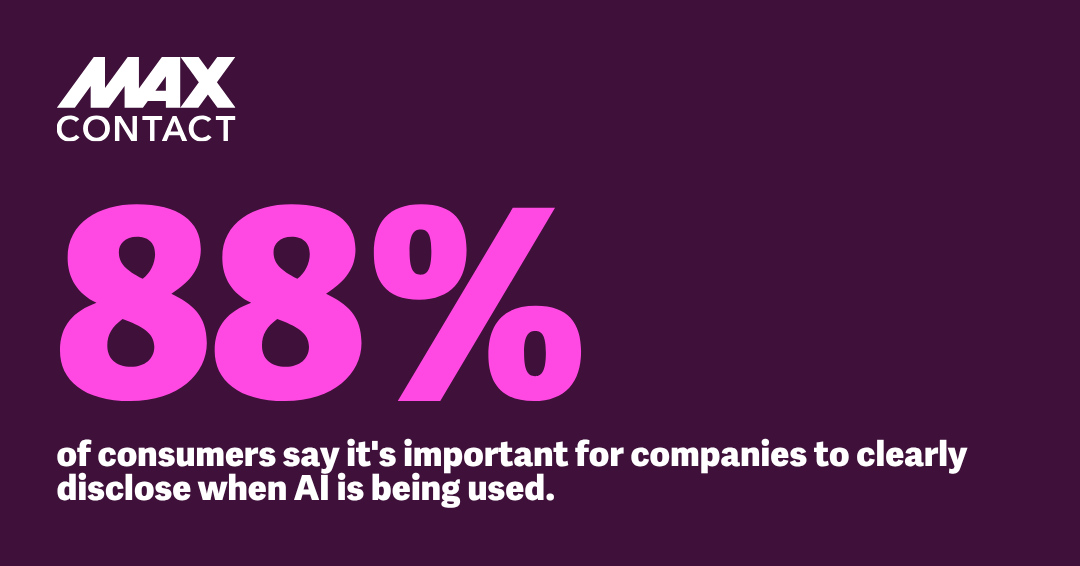
Nearly 9 in 10 (88%) consumers say it's important for companies to clearly disclose when AI is being used. Half say it's very important.
"The reputational risk of undisclosed AI is real and avoidable," says Ben Booth. "Consumers aren't opposed to AI - they're opposed to being kept in the dark about it. Deploying AI without disclosure doesn't just frustrate customers; it reinforces the same uncertainty that's causing them to screen your calls."
AI Adoption: Where It Works and Where It Doesn't
Consumer opinion on AI is nuanced. Where AI genuinely adds value, consumers are broadly willing to accept it:
- Answering FAQs: 36%
- Routing to the right department: 35%
- Account updates and billing information: 26%
But the picture reverses sharply when it comes to high-stakes interactions. Over half (54%) say they don't want AI involved in emergency situations. Significant numbers also object to AI involvement in complex account problems (50%), financial discussions (49%) and when negotiating terms (46%).
Crucially, 71% of consumers say they'd be comfortable with AI helping resolve an issue faster — as long as a human agent was available throughout. The acceptance of AI is conditional on a clear, accessible escalation path.
Humans Still Matter Where It Counts
Despite the growth of AI and automation, consumers are clear about when they need a person:
- Emergency situations - 41% want a human agent
- Complex account queries - 33%
- Financial discussions — 29%
- Explaining a sensitive or personal matter - 26%
- Making a complaint - 23%
These aren't edge cases. An AI that handles a billing query well creates modest goodwill. An AI that mishandles a bereavement disclosure or an emergency can permanently damage a customer relationship.
When things go wrong and complaints happen, consumers care most about: a clear explanation of the outcome (39%), being kept updated throughout (37%), appropriate compensation when the company is at fault (33%), and only having to explain the issue once (31%).
What Builds and Breaks Consumer Trust
Our research shows consistent patterns in what drives contact experience, positively and negatively.
What puts consumers off before they even try:
- Long wait times: 36%
- Being transferred multiple times: 34%
- Difficulty reaching a human: 29%
- Having to repeat themselves: 28%
What good looks like:
- Quick resolution -36%
- Easy access to a human when needed - 35%
- Knowledgeable agents - 34%
- Clear communication throughout - 32%
On channel trust, email remains the most trusted channel for company contact (51%), followed by phone calls (30%) and letters (27%). For outbound communications that don't need an immediate response, email is still the most credible messenger.
Five Focus Areas for Contact Centre Leaders in 2026
Based on our findings, these are the areas that will have the most impact:
- Fix the identification gate: Deploy branded caller ID, carrier number reputation management and pre-call communication. The recoverable opportunity isn't every screened call; it's the willing contacts who are filtering themselves out because they fear scams.
- Make AI disclosure the default: Clearly disclose AI use at the start of every AI-assisted interaction. In regulated sectors, it's a compliance requirement. Everywhere else, the reputational risk is reason enough.
- Protect the human escalation path : Across every question about AI in this study, the most-cited condition for consumer acceptance was the same: a human must be available and clearly signposted. Design the escalation as carefully as you design the AI.
- Treat 'only explain once' as an infrastructure target: CRM integration, context-passing between channels, and warm handoffs are the operational response to the number one complaint driver.
- Audit complaint journeys against what consumers actually need : A clear outcome explanation, ongoing updates, appropriate compensation, not having to repeat themselves, and a human presence. These five things determine whether a resolved complaint becomes a trust-builder or a churn trigger.
Want the full picture? The Voice of the UK Consumer 2026 report includes sector-by-sector breakdowns across utilities, telecoms, finance/debt, and insurance — with data on vulnerability handling, AI comfort, complaint experience, and regulatory risk. Download the full report here.