Call centre efficiency isn’t just about doing more with less - it’s about consistently delivering high-quality service while optimising resources. In this blog, we’ll explore how call centre metrics and KPIs are used to measure contact centre performance, the metrics that matter most, and how your call centre can overcome common obstacles to thrive in a competitive industry.
How to measure call centre performance & efficiency
Efficiency in a contact centre can look very different depending on the industry you serve. A sales-driven BPO will measure success differently than a customer service team in retail. But across all sectors, efficiency is defined by one universal goal: delivering excellent service with minimal resources.
This means running a contact centre built on optimised operations, supported by a well-trained, motivated team. Achieving this balance requires focusing on four key pillars:
- Operational performance: Efficient processes, accurate resource allocation, and adaptability to fluctuating demands ensure your contact centre runs smoothly.
- Customer experience: Quick, effective, and empathetic service builds loyalty and enhances your brand.
- Agent productivity: Empowering agents with the right tools and training helps them handle calls effectively while avoiding burnout.
Cost management: Reducing waste through automation and optimising resource use ensures profitability without compromising quality.
Which call centre metrics and KPIs measure performance and efficiency?
The KPIs you choose to measure and track will depend on your contact centre’s focus, whether it’s customer service, outbound sales, or debt collection. However, there are common call centre metrics and KPIs that apply across most operations, as they provide insight into operational performance, customer satisfaction, and agent productivity.
According to our 2025/26 UK Contact Centre KPI Benchmarking Insights Report, the KPIs contact centres most commonly prioritise reflect a balance of customer experience, responsiveness, and operational performance.
The most selected metrics were customer satisfaction (48%), speed of answer (35%), service level achievement (34%), conversion rate (33%), and first call resolution (33%).
While priorities vary by operation, the following KPIs consistently play a central role in measuring overall contact centre efficiency.
1. Average Handle Time (AHT)
AHT measures the average time an agent spends on a call, including hold time and after-call work. It indicates how efficiently customer interactions are handled.
Average handle time varies depending on the type of contact centre. In our 2025/26 benchmark report, the mean inbound AHT was 8 minutes, with outbound operations reporting a similar average.
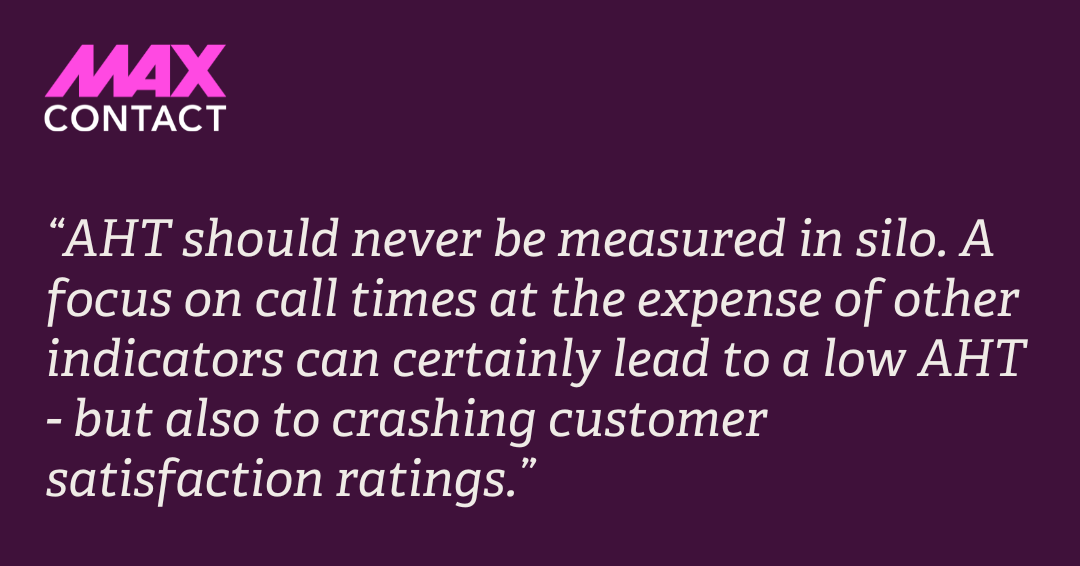
While a high AHT might indicate inefficiency, it’s not always negative. Agents may need more time to resolve complex or sensitive queries, which can boost customer satisfaction in the long term. In customer care and technical support, over a third of respondents reported higher AHT (10–15 minutes), reflecting the complexity of support queries.
Balancing AHT is key - focus on resolving issues thoroughly without rushing customers.
2. Quality Assurance (QA) Score
QA Score measures the quality and consistency of agent interactions, including compliance and customer experience standards.
In the 2025/26 benchmarking report, 29% of decision makers selected compliance scores as one of their most important KPIs, reinforcing that quality and adherence remain central to efficient performance.
Strong QA processes support efficiency by reducing repeat contacts, minimising compliance risk, and improving first-contact outcomes.
High QA scores indicate that agents are meeting both regulatory and customer expectations, building trust and loyalty.
Regular analysis of QA results can uncover coaching opportunities and refine scripts to drive consistent performance.
3. Customer Satisfaction (CSAT)
CSAT measures how satisfied customers are with their interaction, which is typically gathered through post-call surveys.
In our benchmarking report, customer satisfaction scores were the most selected KPI overall, prioritised by 48% of respondents.
High CSAT scores show that agents are meeting customer needs effectively, but speed doesn’t always equal satisfaction. A personalised and thorough approach is often more impactful than a quick, impersonal resolution.
4. First Contact Resolution (FCR)
FCR measures the percentage of customer issues that are resolved during the first interaction, without the need for follow-ups or escalations.
For inbound customer care and technical support teams, the mean FCR is 41%. While performance varies, 27% of respondents reported inbound FCR levels between 50% and 79%, showing what’s achievable for well-optimised teams.
A strong FCR not only improves customer loyalty but also reduces operational costs by minimising repeat calls. If your FCR is low, assess whether your agents have the tools, training, and support to resolve queries on the first attempt.
Still not decided which other call centre performance metrics to track? Take a look at our guide to call centre reporting metrics and KPIs.
Benchmarking call centre efficiency: Where to begin
To measure the efficiency of your call centre, it's important to benchmark performance so that you can identify opportunities for improvement.
Using AI-driven QA and analytics tools can help you monitor key call centre metrics against industry standards, competitors, or past performance, and make it easier to uncover insights that will drive operational success.
For outbound teams specifically, using purpose-built tools like MaxContact’s outbound engagement solution can help you track and optimise key outbound call centre metrics, such as contact rates, conversion rates, and calls-to-success.
1. Collect the right data
- Use advanced call centre software to track specific KPIs (AHT, FCR, CSAT)
- Segment data by channel, team, or call type to identify trends.
2. Compare performance
- Benchmark metrics against industry standards, competitors or past performance.
- Analyse differences between teams, shifts, or channels to uncover strengths and weaknesses.
3. Set realistic goals
- Align targets with business objectives and Service Level Agreements (SLAs)
- Prioritise actions that balance efficiency with quality.
4. Monitor and adapt continuously
- Use performance analytic dashboards to track metrics in real time.
- Regularly review benchmarks to meet changing customer expectations.
How do you compare?
Gain insight into how your performance measures up and download our Benchmark Report.
What stalls contact centre performance?
Even with the right metrics in place, contact centres face common challenges that can hinder efficiency. Here are some of the pitfalls to watch out for. Learn how it impacts performance and how to overcome it
1. Outdated & unreliable technology
Does your contact centre rely on legacy systems? Do you struggle with limited integration capabilities and slow performance?
While it can be tempting to push on with legacy systems, it’s important to recognise that outdated technology lacks advanced features like AI-driven analytics and real-time reporting. As new technology evolves, your legacy tech will soon have you falling behind competitors who stay up to date.
The impact
- Your Average Handle Time remains high due to slow systems and limited customer information access.
- You struggle to improve your poor CSAT as customers consistently experience delays.
- Your legacy system's limited reporting capability doesn't give you the depth of insights needed for decision-making.
Learn how Compare My Insurance improved call centre performance metrics after replacing an unreliable dialler system.
2. Manual processes & inefficient operations
Do you frequently question why your call agents aren’t as productive as you’d hoped? Perhaps you’ve noticed that your call team always seems busy but aren’t delivering quick and efficient call outcomes?
If your contact centre is operating with outdated workflows and ineffective call routing methods, it leads to inconsistent customer service.
Another aspect that damages productivity, is when call centre agents spend too much time completing manual tasks, such as dialling and post-call updates.
The impact
- Your FCR reduces as your call agents struggle to resolve queries efficiently.
- Lack of utilised resources and poor operations lead to frustrated customers and higher call abandonment rates.
- You continuously waste money and resources on redundant processes.
See how D2MS improved outbound call centre metrics using MaxContact’s auto-dialler and reporting tools.
3. Training and development gaps
Be honest. Does your call centre overemphasise system training? Do you have a big enough focus on soft skills like conflict resolution?
If agent training in your contact centre is generic and sporadic, the likelihood of development gaps becomes a risk.
The impact
- Overall, agent performance is inconsistent and incidents of non-compliance increase.
- Your call agents feel unsupported in skill development, which leads to retention issues.
Discover how Honey Group improved call centre performance and QA metrics using speech analytics.
4. Poor workforce management
For many contact centres, effectively managing the workforce is a struggle. Do you frequently find that your call centre is under-resourced during peak times? Or are there periods of time where your call centre is over-staffed and call agents are idle?
If the answer is yes, then you have fallen into the trap of inaccurate forecasting and inefficient scheduling.
The impact
- Your CSAT is poor due to stretched resources and agent fatigue.
- Your contact centre experiences high agent turnover rates, which drives up recruitment and training costs. This pressure is reflected in our latest benchmark data: 53% of respondents said agent workloads have increased over the last year, and mean annual agent turnover sits at 31%.
Modern workforce management tools can help balance workloads and optimise resource use.
MaxContact: Your partner in efficiency
Modern contact centre software is the backbone of operational excellence. MaxContact’s solutions are designed to help teams improve call centre metrics, performance, and customer outcomes:
- Intelligent call routing: Skills-based routing connects customers to the most qualified agents, improving FCR and reducing AHT.
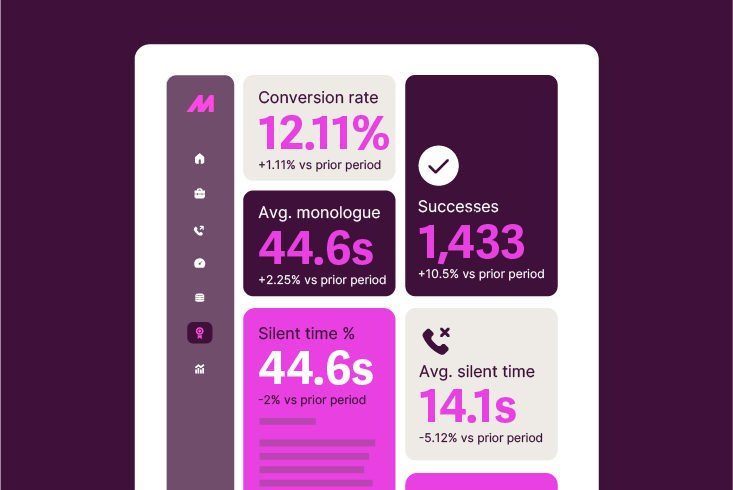
- Real-time analytics: Performance dashboards provide call centre leaders with instant insights, helping them address inefficiencies and optimise resources.
- AI speech analytics: Automatically transcribe speech to text, speeding up QA processes and improving agent performance with data-led feedback.
- Predictive analytics: Anticipates customer needs, refines scripts, and helps overcome objections for better outcomes.
Efficient call centres aren’t built overnight. But with the right tools, strategies, and benchmarks, they’re within reach. Discover how MaxContact can help you boost efficiency, enhance customer satisfaction and future-proof your operations.




.png)