But reporting on results isn’t the same as being data-driven. In outbound sales, data only creates value when it is used to actively influence decisions; ideally, while activity is still happening rather than when it is reviewed days later.
A genuinely data-driven outbound sales team will use live performance data to shape how calls are placed, which leads are prioritised, how agents are routed and where coaching is applied. Data, technology and execution work together as a single system.
In this article, we explore what “data-driven” should really mean for outbound sales teams operating in a contact centre environment. We look at the outbound sales metrics that matter most, how technology turns those metrics into real-time decisions, and share the latest data from our Benchmark Report to help you determine whether your performance is average or genuinely competitive.
Use data to decide which leads deserve agent time
Outbound sales teams should focus on maximising productive talk time as the foundation. But the next question becomes, who should agents be spending that time speaking to?
The average first-call close rate across outbound sales teams is 25%, with 31% of teams achieving rates between 20% and 29%. This shows that conversion performance is driven less by how many calls are made and more by how effectively effort is focused.
Understanding which metrics genuinely influence outcomes is critical here. Our complete guide to call centre reporting metrics breaks down the KPIs that matter most, and how they should be interpreted in context rather than in isolation.
Sales teams should concentrate on prospects that are most likely to convert. Which means the first-in, first-out approach to lead prioritisation is an ineffective strategy.
This is where intelligent lead prioritisation tools powered by AI have a huge operational impact. By pulling data from multiple sources, such as recent engagement, historical call outcomes, conversion performance, and potential deal value, intelligent lead prioritisation ranks leads dynamically. As prospect data signals change, prioritisation updates are applied automatically, which means agents consistently spend their available talk time on the opportunities most likely to deliver results.
Use data to match the right agent to the right lead
Data-insights need not stop at determining high-value and high-intent leads. It can also influence who handles them.
While the mean average revenue per call across outbound sales teams is just under £230, over 45% of teams generate less than £59 per call. This gap highlights how widely outcomes can vary depending on agent capability.
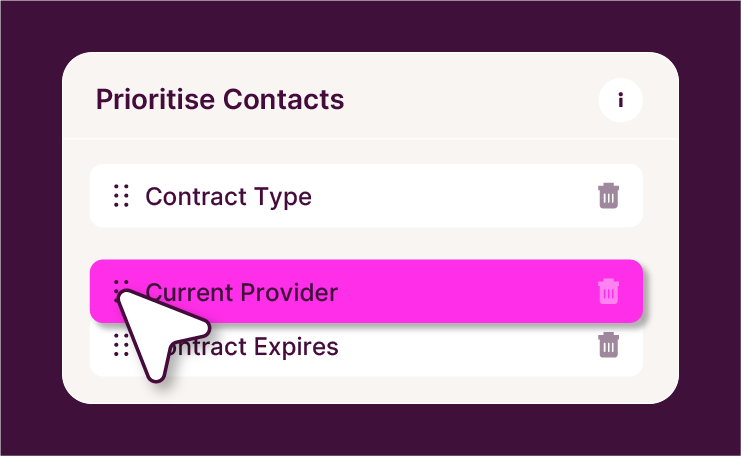
When data is used to create value, agent assignment isn’t random or purely availability-based. Instead, performance data is used to match leads with the agents most likely to convert them. For example:
- Higher-value or more complex opportunities can be routed to experienced agents with deeper product knowledge or a proven track record of closing similar deals.
- Price-sensitive or early-stage leads may be better suited to agents who perform strongly at qualification and objection handling.
- Sector-specific prospects can be matched with agents who have previous success in that industry or campaign type.
Skill-based routing makes this possible by using historical performance data such as conversion rates by product, deal size, objection type, or lead source. As new performance signals are captured, routing rules can be refined so decisions improve continuously.
Use real-time performance data to intervene early
Outbound sales performance can change quickly. So, relying on end-of-day or weekly reports limits how effectively teams can respond. Retrospective reporting removes the opportunity to correct issues such as poor lead targeting or gaps in agent performance.
Access to real-time performance data gives sales managers the visibility they need to intervene without burning through contact. Live dashboards show early signals, such as declining connect rates, falling conversion performance, or uneven agent productivity.
Instead of waiting for performance reviews, managers can guide execution as it happens. This might involve reallocating resources, adjusting call scripts, changing lead allocation, or providing targeted coaching.
Contact centres that use real-time insight to guide daily decision-making are better positioned to protect conversion rates and maximise the impact of agent time.
For outsourced or multi-client environments, this ability to intervene early is particularly important. Our article on how BPOs can meet their KPIs explores the additional performance and reporting challenges faced by outsourced contact centres.
Use Conversation Analytics to understand why performance varies
Surface-level metrics such as contact rate, conversion rate and first-call close rate explain what is happening in outbound sales. But the why behind performance differentiation is dependent on agents, campaigns, or lead types, and teams need insight from the conversation itself.
Our Conversation Analytics analyses 100% of outbound calls, transforming unstructured call audio into actionable insight that would be impossible to capture through manual review or random sampling.
With the ability to analyse conversations at scale, sales leaders can review and identify the underlying drivers of performance. This insight helps explain why certain agents convert more effectively, why objections stall progress, or why specific lead types underperform despite similar call volumes.
In practice, Conversation Analytics supports data-driven outbound sales teams by enabling:
- More targeted coaching: Identify the techniques used in successful calls and pinpoint where individual agents need support
- Better script and messaging optimisation: Surface patterns in high-performing conversations and common objections
- Improved quality and compliance oversight: Analyse every call rather than small samples
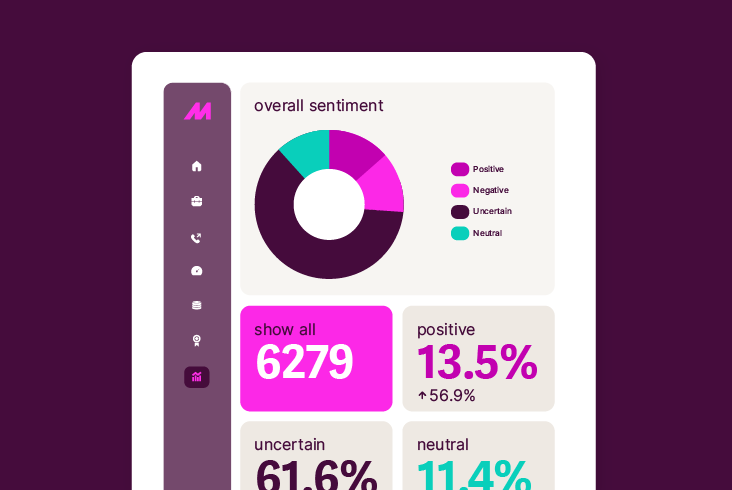
- Earlier identification of emerging issues: Spot shifts in sentiment, objections, or competitor mentions
If you’re looking for a broader view of how these metrics work together, our guide on how to measure call centre efficiency explores how performance indicators combine to drive overall effectiveness.)
Key benefits for outbound sales teams include:
- Enhanced Agent Training: Identify successful techniques and areas for improvement, allowing for targeted training programmes.
- Customer Sentiment Analysis: Detect changes in tone and emotion, helping agents adapt their approach in real-time.
- Quality Assurance at Scale: Analyse every call, ensuring comprehensive QA and quick identification of compliance issues.
- Identifying Sales Opportunities: Recognise patterns in successful calls to refine sales scripts and strategies.
- Competitor Intelligence: Flag mentions of competitors, providing valuable market insights.
- Trend Identification: Quickly spot emerging trends in customer behaviour or common objections.
By implementing speech analytics, outbound sales teams can gain data-driven insights that lead to more effective strategies, improved customer experiences, and better business outcomes. Use these insights to identify common objections, spot successful sales techniques, and provide targeted coaching to your team. A recent study by Forrester found that companies using AI-driven speech analytics saw a 10% increase in customer satisfaction scores and a 15% improvement in first-call resolution rates.
With speech analytics, you’re not just collecting more data – you’re gaining the ability to understand and act on the nuances of every customer interaction, transforming your outbound sales operation into a truly data-driven powerhouse.
Sustaining data-driven outbound sales performance
When combined with performance data, conversation analytics closes the loop between insight and action. Conversation analytics doesn’t sit alongside metrics. It explains them and enables more confident decisions and continuous improvement.
Using more tools or tracking additional metrics doesn’t automatically make an outbound sales team data-driven. Data only becomes valuable when it actively guides decisions across the contact strategy, from how calls are dialled, and leads are prioritised, to how agents are routed, coached and optimised.
In genuinely data-driven teams, agents and managers understand what key metrics mean, how they influence outcomes and when intervention is needed. Performance reviews focus on interpreting trends and agreeing on clear next actions, rather than simply reporting on results after the fact.
The most effective outbound sales teams connect data. By linking real-time performance insight with intelligent technology and informed decision-making, they improve results while activity is still in progress, not once opportunities have already passed.
If you want to understand how your outbound sales performance compares to other UK contact centres, benchmarking is the most effective next step.
Download the 2025-26 UK Contact Centre KPI Benchmarking Report to explore industry averages, performance gaps and the characteristics of high-performing outbound teams.



.png)
