featured
article
Fresh thinking and practical takeaways to help your business improve customer engagement and unlock better performance.

discover THE
latest articles
How IVR Payments Transform Contact Centre Operations
Taking payments over the phone shouldn't be a bottleneck in your contact centre operations. Yet many businesses still rely on manual processes that tie up agents, create compliance risks, and frustrate customers who simply want to pay quickly and securely.
Taking payments over the phone shouldn't be a bottleneck in your contact centre operations. Yet many businesses still rely on manual processes that tie up agents, create compliance risks, and frustrate customers who simply want to pay quickly and securely.
The solution? Interactive Voice Response (IVR) payment systems that automate the entire payment process while maintaining the highest security standards.
Here's how IVR payments can revolutionise your contact centre's efficiency, reduce costs, and deliver the seamless customer experience your clients expect.
What Are IVR Payments?
IVR payment software enables customers to make secure payments over the phone without directly interacting with a call agent. Instead of tying up your team with routine payment processing, the system handles transactions automatically while maintaining full PCI DSS compliance.
Think of it as a secure, automated payment assistant that works alongside your contact centre team—handling the routine while freeing your agents to focus on high-value conversations.
Three Ways to Process Payments with IVR Technology
Modern IVR payment systems offer flexibility to match your customers' preferences and your operational needs:
1. Online Payment Links
Create secure payment links that you can send via digital channels. Customers can complete payments through web chat or email links without any agent involvement. It's convenient, secure, and available 24/7.
2. Assisted Payments
Your agents handle the call, but at the payment stage, customers enter card details using their phone keypad. DTMF masking means agents never see or hear sensitive information—the data is encrypted and passed directly to your payment provider. After payment, the conversation continues normally.
3. Automated Payment Lines
Fully self-service payments available around the clock. Customers call your IVR system, get security verified, receive account information if needed, and complete their payment using keypad entry. All sensitive information is masked and encrypted before being sent to your payment provider.
The Business Case: Why IVR Payments Drive Results
The benefits of implementing IVR payment systems extend far beyond convenience. Here's how they impact your key operational metrics:
Higher Payment Success Rates
Complex, manual payment processes often lead to abandoned transactions. IVR systems simplify the process, let customers pay when convenient, and reduce friction through automation. The result? Significantly improved payment success rates across your operations.
Improved First Contact Resolution (FCR)
When payment is the primary reason for customer contact, IVR systems can resolve the need immediately without requiring follow-up calls. This boosts your FCR rates—a key indicator of contact centre excellence—while reducing the time and resources needed per customer interaction.
Lower Cost Per Contact
IVR payments reduce operational costs in multiple ways:
- Fewer agent resources needed for routine payment processing
- Reduced error rates through automation, meaning fewer failed payments and follow-up contacts
- 24/7 availability without additional staffing costs
Security That Protects Everyone
Payment security isn't negotiable. IVR payment systems deliver PCI DSS Level 1 compliance and ISO 27001 certification as standard, ensuring:
- Complete data protection: Sensitive payment information is never stored in your contact centre environment
- Agent protection: Call handlers never see or hear card details during the payment process
- No payment recordings: The system automatically pauses recording during payment entry
- Encrypted processing: All payment data is encrypted before being passed to your payment provider
This comprehensive security approach protects your customers, your agents, and your business from data breaches and compliance issues.
Customer Experience That Builds Loyalty
From your customers' perspective, IVR payments deliver exactly what they want: choice, convenience, and speed.
Reduced Waiting Times: Customers can make payments without waiting for available agents, especially during peak periods.
Flexible Payment Options: Whether they prefer self-service, assisted payments, or online links, customers can choose the method that suits them best.
24/7 Availability: Payments don't have to wait for business hours, reducing missed payment opportunities and improving cash flow.
Privacy and Control: Some customers prefer making payments without speaking to an agent—IVR systems provide that option while maintaining security.
These positive payment experiences contribute to higher customer satisfaction scores and Net Promoter Scores, creating a virtuous cycle of customer loyalty and referrals.
The Operational Transformation
Implementing IVR payments isn't just about processing transactions—it's about transforming how your contact centre operates:
Free Up Agent Capacity: With routine payments handled automatically, your team can focus on complex queries, relationship building, and revenue-generating activities.
Improve Compliance: Automated systems reduce human error and ensure consistent adherence to security protocols.
Scale Efficiently: Handle more payment transactions without proportional increases in staffing costs.
Enhance Reporting: Automated systems provide detailed analytics on payment patterns, success rates, and customer preferences.
Making the Right Choice for Your Operations
Whether you're running a debt collection agency, retail operation, or customer service centre, the question isn't whether to implement IVR payments—it's how quickly you can deploy them to start seeing results.
The most successful contact centres understand that automation isn't about replacing human interaction—it's about optimising it. By automating routine payment processing, you free your team to focus on the conversations that truly require human expertise, empathy, and problem-solving skills.
IVR payments represent a strategic investment in operational efficiency, customer satisfaction, and compliance security. They're not just a payment solution—they're a pathway to a more efficient, customer-focused contact centre operation.

From Insight to Action: Unleashing the power of data in your contact centre
Today, contact centres are sitting on a treasure trove of information that could revolutionise their operations. But how can leaders tap into this wealth of data to drive meaningful improvements? This question was at the heart of a recent presentation by Matthew Yates, VP of Engineering at MaxContact, during our Afterwork event.
Yates, with his extensive background in enterprise IT and software engineering, painted a vivid picture of the data landscape. He began with a startling comparison: the amount of data generated globally each year surpasses the number of grains of sand on all the world’s beaches. In 2023 alone, the world produced a staggering 120 zettabytes of data, with projections indicating this figure will reach 181 zettabytes in 2024.
For contact centres, this data deluge manifests in various forms: call metrics, digital channel information, customer interactions, agent performance data, and more. The challenge – and opportunity – lies in effectively harnessing this wealth of information to drive tangible improvements.
Drawing inspiration from an unlikely source, Yates shared the story of David Brailsford and the British cycling team. Brailsford’s ‘marginal gains’ philosophy, which focused on achieving 1% improvements across multiple areas, led to unprecedented success in the 2008 and 2012 Olympics. This approach, Yates argued, can be equally transformative in contact centre operations.
To implement data-driven decision making, Yates outlined three key aspects:
Setting Clear Objectives
Utilising frameworks like Objectives and Key Results (OKRs) can help align teams and focus efforts on specific, measurable goals. Yates emphasised the importance of setting clear, company-wide objectives that cascade down to departmental and individual levels.
He shared MaxContact’s experience of implementing OKRs, noting that they initially struggled with having too many objectives. They found success by limiting themselves to no more than three company-wide OKRs per quarter, ensuring these were specific, measurable, attainable, realistic, and time-bound (SMART). Yates stressed the importance of regularly reviewing progress towards these objectives, suggesting weekly check-ins to keep them at the forefront of operations.
Understanding and Managing Data
This involves conducting an audit of available data, establishing governance, leveraging appropriate tools (including AI), and making data accessible across the organisation. Yates advised contact centre leaders to start by understanding what data they currently have and identifying any gaps. This includes considering where data is stored, who has access to it, and how it’s processed.
He highlighted the importance of establishing data governance, even if it’s just assigning a data steward responsible for maintaining and updating crucial data sets. Yates also encouraged leaders to invest in appropriate tools for data analysis, including AI-powered solutions that can help generate insights from large datasets. Importantly, he advocated for making data accessible to all staff, not just management, to maximise the potential for innovation and insights.
Watch the full talk from Matthew Yates:
Creating a Data-Driven Culture
This starts with leadership setting expectations and leading by example. It also involves providing necessary training, encouraging data-backed decision making, and fostering a mindset of continuous improvement. Yates emphasised that senior leaders must demonstrate their commitment to data-driven decision making, backing up their gut feelings with hard data. He suggested implementing a policy where significant decisions require the evaluation of at least three options, ensuring a thorough analysis backed by data.
Training staff in data analysis and interpretation is crucial, as is encouraging all team members to question the data and seek opportunities for improvement. Yates likened this to the ‘marginal gains’ philosophy, where small, data-driven improvements can lead to significant overall progress over time.
Adopting a Data-Driven Approach
The benefits of adopting a data-driven approach are substantial. Citing research from McKinsey, Yates noted that organisations effectively leveraging data are 23 times more likely to acquire customers, 6 times more likely to retain them, and 19 times more likely to be profitable.
Yates encouraged contact centre leaders to foster a data-driven mindset, refine their data management and analysis tools, and embrace a culture of continuous improvement. By focusing on these areas and seeking marginal gains, contact centres can significantly enhance their performance and achieve better outcomes for both their customers and their business.
As the digital landscape continues to evolve, those who can effectively harness the power of data will undoubtedly lead the pack in the contact centre industry. The question is: will your organisation be among them?
To hear more insights on data driven performance and similar topics relating to the contact centre, join the MaxContact Community to be notified about similar future events.
What is Contact Centre as a Service (CCaaS)?
Delivering Exceptional Customer Service in the Cloud.
Customer expectations are at an all-time high and your contact centre is undoubtedly feeling the pressure. When communicating with companies, customers demand availability across multiple channels, and they want quick, efficient service.
Traditional on-premise call centres with their siloed operations and limited multichannel options, may find themselves struggling to keep up with customer expectations.
This is where Contact Centre as a Service (CCaaS) steps in. A solution for businesses of all sizes, CCaaS is a cloud-based solution that supports exceptional customer service, even as demand grows.
So what is CCaaS & how exactly does it work?
Imagine a contact centre that doesn’t require bulky hardware or complex setup. Contact Centre as a Service delivers all the functionalities of a traditional contact centre, minus the hassle. Your agents can manage inbound and outbound communications – phone calls, emails, texts, web chats, and even social media messages – all on a single, unified platform.
CCaaS vs Traditional Call Centres: What’s the Difference?
As you can see, Contact Centre as a Service delivers flexibility and scalability in abundance – and the benefits don’t stop there.
Let’s consider the benefits of CCaaS in more detail
There’s a reason why CCaaS is the go-to solution for BPO contact centres and businesses that rely on contact centre operations.
- Cost-Effectiveness
Buying, maintaining and replacing hardware and software can be expensive. CCaaS operates on a pay-as-you-go model, which means that you only pay for the features and capacity you need.
- Scalability & Flexibility
As your business and operations grow, so can your CCaaS solution. A cloud-based solution means that you can add or remove features and users to meet the needs of your business.
- Enhanced Customer Experience
Your customers want to contact you on their preferred channels, whether that be phone, email, SMS or social media. CCaaS provides omnichannel support, allowing customers to connect easily. What’s more, real-time analytics and AI tools empower you to proactively address customer issues and personalise interactions, providing a better customer experience all round.
- Boosted Agent Productivity
CCaaS comes with features that help to boost agent productivity. It means that agents can automate repetitive tasks and be more prepared, thanks to advanced tools like call recording and quality management. This frees them up to focus on resolving complex customer issues, maximising their output.
- Improved Security & Reliability
Data security is a major concern. Leading CCaaS providers prioritise data security and infrastructure redundancy. This gives complete peace of mind and keeps your operations running smoothly.
- Faster Access to New Features
With new technology constantly emerging, it’s important to have a set-up that allows you to adopt new features quickly and easily – especially if you want to maintain a competitive edge. Cloud-based deployment allows for quicker adoption of cutting-edge features like generative AI.
What challenges does Contact Centre as a Service solve for your business?
The power of CCaaS lies in the feature-rich environment that it creates. Let’s explore some key functionalities and how they benefit your operations.
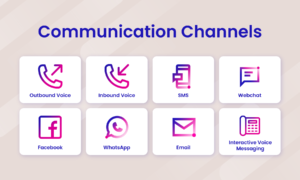
Omnichannel
The Problem: I want to give customers omnichannel options without a siloed service.
The Solution: CCaaS omnichannel features provide a unified platform for managing all channel interactions. So, if a customer starts their enquiry through a chat window but needs to escalate to a phone call, the agent has access to the entire conversation history, allowing for a smooth and personalised transition.
Automatic Call Distribution (ACD)
The Problem: I want to reduce caller frustration by reducing waiting times and making sure enquiries are dealt with efficiently.
The Solution: ACD intelligently routes incoming calls to the most qualified available agent based on factors like skills, workload and language. This not only improves customer satisfaction by reducing wait times, but also ensures agents spend their time resolving issues they’re best equipped to handle.
Interactive Voice Response (IVR)
The Problem: I want to solve simple enquiries more efficiently to free up agents for more complex interactions.
The Solution: IVR acts as your virtual assistant, enabling customers to self-serve if they have a common enquiry. An IVR system can guide them through the process using voice prompts, keypad selections and in some cases spoken requests, freeing up agents for more complex issues.
Workforce Management
The Problem: I need to tackle inefficient agent scheduling and resource allocation.
The Solution: Workforce management tools optimise your agent team’s performance in many ways. Create schedules that consider agent skills, availability, and projected call volume. Monitor metrics like call handling time, resolution rates, and customer satisfaction to identify areas for coaching and improvement. And, plan for call volume fluctuations and make sure you have the right resources in place to meet customer demands.
Contact Centre Reporting & Dashboards
The Problem: I have limited visibility into contact centre performance, making it difficult to benchmark KPIs
The Solution: Comprehensive reporting and analytics dashboards provide valuable insights into various aspects of your contact centre’s performance. You can track key metrics like call volume, average handle time (AHT) and first call resolution (FCR). By analysing these reports, you can gain a clear understanding of your contact centre’s strengths and weaknesses, and make data-driven decisions to optimise your operations.
The Power of Integration
While each CCaaS feature offers individual benefits, the true strength of these features lies in integration. With CCaaS, it is easy to integrate features with other critical business systems like CRM, workforce management, and reporting tools. This creates a unified ecosystem for managing your customer interactions and your contact centre operations as a whole.
Here is an overview of the data you can leverage through these integrations:
- CRM Integration: Imagine an agent assisting a customer with an order issue. With CRM integration, the agent can access the customer’s account information, purchase history, and past interactions – all within the CCaaS interface. This allows for a more personalised and efficient service experience.
- Workforce Management Integration: Data from your CCaaS platform can automatically populate your workforce management system, simplifying scheduling and agent performance tracking.
- Reporting Integration: Consolidate data from multiple sources – CCaaS, CRM, workforce management – into a single reporting dashboard. This holistic view empowers you to make data-driven decisions based on your entire operation.
By integrating your CCaaS solution with these critical systems, you create a streamlined and data-driven approach, ultimately leading to happier customers and a more efficient contact centre.
How does CCaaS boost outbound performance?
CCaaS benefits both inbound and outbound operations. For outbound operations like sales and debt collection, CCaaS features can become integral tools for hitting KPIs.
Contact centres with a sales focus for example, can rely on workforce management tools to ensure agents with the right skills are calling prospects at the right time. Better still, CRM integrations means that those agents have all the information they need to establish personalised interactions, building rapport and automating workflows for faster sales cycles. Valuable customer data can also help tailor sales pitches for better conversion rates.
It’s not just sales functions that benefit from CCaaS either. Let’s take debt collection functions, another industry where outbound activity is important. For debt collection agents, predictive dialling maximises contact with the right people, while call recording ensures adherence to regulations.
Furthermore, smart scheduling based on call volume and debtor behaviour, combined with skills-based routing, keeps agents productive. PCI-DSS compliant payment processing through CCaaS integrations streamlines collections to boost cost per collection rates, while payment IVR gives customers an accessible self-serve option.
Finally, CRM integrations empower agents with a complete debtor view, enabling personalised communication strategies that improve collection rates and encourage a more positive experience for debtors.
CCaaS furture-proofs your business
Adopting CCaaS isn’t just about modernising your contact centre; it’s also about setting up your business for the future. The adaptability of CCaaS allows you to position your business to leverage the ever-growing potential of AI.
Over the last few years, AI has already transformed contact centre operations:
- AI-powered Chatbots: These virtual assistants handle basic enquiries and requests, freeing up human agents for more complex issues. They can even leverage natural language processing to understand and respond to customer questions in a natural way, providing a 24/7 self-service option for your customers.
- Automatic Call Routing: AI analyses incoming calls, identifying the caller’s intent and urgency. It then routes them to the most qualified agent based on factors like skills, language, and availability. This ensures faster resolution times and a more efficient use of agent resources.
- Speech Analytics & Sentiment Analysis: AI can analyse the tone and emotion in a customer’s voice in both spoken or text interactions. This allows agents to tailor their communication style and identify potential escalations before they happen, leading to a more positive customer experience.
- Predictive Analytics: AI can analyse historical data to forecast future call volume and customer behaviour. This empowers you to proactively schedule agents and resources, ensuring you’re always prepared to meet customer demand.
These are just a few examples of how AI is already shaping the future of CCaaS. As AI technology continues to develop, we can expect even more innovative features and functionalities to emerge, further transforming the customer service landscape. By embracing CCaaS now, you’re ensuring your business is ready to capitalise on these future advancements, and not fall behind.
Why choose MaxContact as your CCaaS partner?
If you’re looking for a flexible contact centre solution that easily integrates with your existing software and enables your agents to work from anywhere – look no further than MaxContact.
We’ve built an industry-leading CCaaS platform designed to help your content centre thrive:
- Our CCaaS platform embraces the power of AI to ensure that you’re constantly evolving alongside the latest advancements in CCaaS technology.
- One-size-fits-all solutions don’t work. We offer a highly customisable platform that adapts to meet your needs.
- Our cloud-based platform is built with industry-standard practices and multi-layered security to ensure your data is always protected. Robust monitoring and compliance tools provide complete peace of mind.
Want to get started? The process is simple. Our dedicated team of specialists works alongside yours to achieve a smooth transition and ongoing success. With unlimited training and support, we help you to get the most value from your CCaaS investment. Book a demo today and see how MaxContact can transform your contact centre.
MaxContact Empowers Dudley Council: A Success Story in Public Sector Efficiency
At MaxContact, we pride ourselves on delivering a contact centre software solution that drive real-world results. Our partnership with Dudley Council, a large local authority in the West Midlands, demonstrates our commitment to transforming contact centre operations in the public sector.
Dudley Council, who manage over 21,000 properties, faced challenges in rental income collection and arrears management. They needed a solution that could handle their complex requirements while empowering their team to work more independently and efficiently.
The MaxContact team rose to the challenge, providing a dialler system with advanced reporting capabilities. The MaxContact solution addresses Dudley Council’s specific needs, streamlining their operations and enhancing their ability to serve the community effectively.
Key features of the MaxContact solution for Dudley Council included:
- An advanced dialler system for efficient outreach
- Comprehensive reporting for better performance management
- A user-friendly interface for a smooth onboarding experience
- A simple to use product, allowing for independent system updates
The results have been remarkable. Kelly Read, Assistant Team Manager at Dudley Council, reports, “One of the main benefits for us with MaxContact is us being able to amend the system without having to rely on other people, that’s been a key factor for us.”
Our commitment to client success extended beyond the initial implementation. We provided comprehensive training and on-site support, ensuring a smooth transition and empowering the Dudley Council team to make the most of their new system.
The impact has been significant: improved efficiency in rental income collection, enhanced performance monitoring, and increased team autonomy. These improvements have allowed Dudley Council to manage its properties more effectively and respond to residents’ needs more promptly.
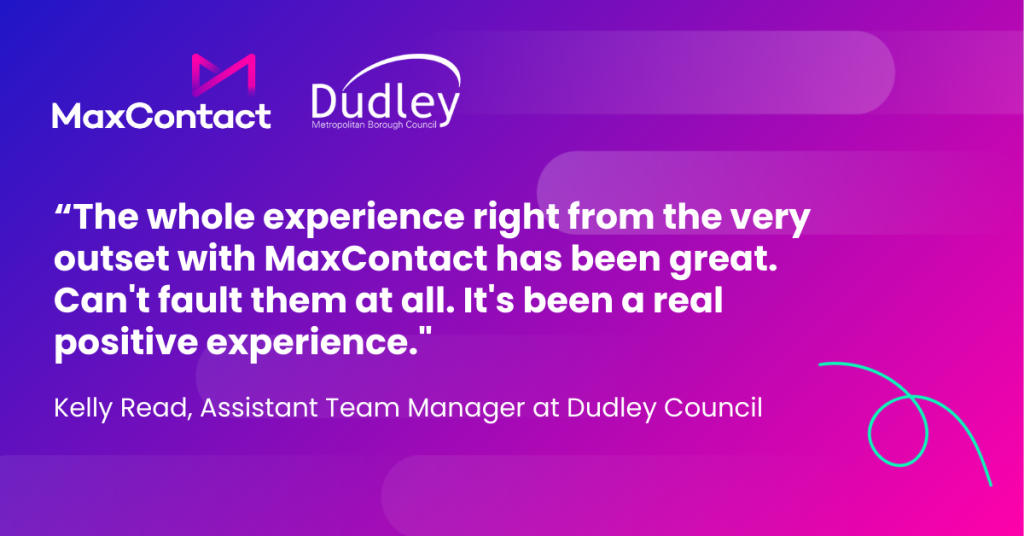
At MaxContact, we’re proud to play a role in improving public service delivery. As Kelly concludes, “The whole experience right from the very outset with MaxContact has been great. Can’t fault them at all. It’s been a real positive experience.”
This success story underscores our commitment to delivering innovative, tailored solutions that make a real difference in the public sector. Find out more about how MaxContact can help overcome demand and drive exceptional customer experiences in your public sector contact centre, here.
.png)
UK Contact Centres Face Perfect Storm of Challenges, MaxContact Report Reveals
July 3rd, 2024 – Manchester, UK – A new report from MaxContact has unveiled the stark realities facing UK contact centres in 2024, with agents battling soaring workloads as the industry grapples with the emerging impact of AI technologies.
The “2024 UK Contact Centre KPI Benchmarking Insights Report”, based on a survey of 500 contact centre leaders working in sales, debt collection and customer service, paints a picture of an industry at a crossroads, navigating post-pandemic changes and emerging technologies.
The report uncovered challenges across different sectors:
- Debt collection functions are facing an uphill battle, reaching the right party in only 26% of calls – a figure that raises serious questions about the effectiveness of current strategies. With household debt on the rise, this low contact rate could have significant implications for the financial sector.
- Sales teams are stuck in a numbers game, with agents making an average of 56 calls daily but achieving success in less than 7% of these interactions. This low conversion rate suggests a need for better lead qualification and more targeted sales approaches.
- Customer service teams are struggling to balance speed and quality, with an average handle time of 7.82 minutes and a first call resolution rate of just 45%. This suggests that while agents are spending significant time with customers, they’re often unable to resolve issues in a single interaction.
The report also sheds light on the human side of contact centres. It indicates that agent workload has increased by 11% on average. However, despite the increasing workload, only 44% of contact centres reported an increase in agent salaries, with an average rise of 7%. This disparity between workload and compensation could exacerbate the industry’s already high turnover rates, which the research found sits at an average of 30% annually.
However, amidst these challenges, the report highlights a potential game-changer: Artificial Intelligence. Nearly 60% of respondents believe AI will significantly impact the industry within three years, with 38% seeing its primary benefit in reducing manual workloads.
“These findings are a wake-up call for the industry,” warns Ben Booth, CEO of MaxContact. “Contact centres are clearly under pressure, and traditional working methods are being pushed to their limits. Those who embrace AI and other innovative technologies now will be the winners of tomorrow. The rest risk being left behind.”
The report also reveals a growing focus on quality assurance, with 83% of respondents considering it very or somewhat important. However, only 39% currently use speech analytics solutions, suggesting a significant opportunity for improvement.
This landmark report serves as both a warning and a roadmap for the contact centre industry. As traditional metrics falter and new challenges emerge, it’s clear that a radical rethink of operations is needed.
The full “2024 UK Contact Centre KPI Benchmarking Insights Report” is available for download here.
About MaxContact:
MaxContact is the best cloud contact centre platform for delivering conversation outcomes and customer insights to generate more revenue – compliantly. Our cloud-based contact centre platform allows you to have more productive conversations and automatically connects the right people for better call outcomes. MaxContact has unrivalled outbound dialling capabilities as well as inbound and omnichannel functionality, plus advanced reporting.
Contact Details:
For further information or media enquiries, please reach out to the MaxContact team at pr@maxcontact.com
.png)
What Is An Outbound Call? Call Centre Best Practices
If you’re an outsourced contact centre dealing with high-volume calls, outbound calling campaigns are vital for driving business growth, acquiring new customers, and nurturing existing relationships. However, executing an effective outbound strategy requires careful planning, the right tools, and a deep understanding of best practices.
In this guide, we’ll explore the essential elements for mastering outbound calling in your call centre.
What Are Outbound Calls?
Understanding the different types of outbound calls before turning your attention to strategy is crucial. The various objectives behind outbound calling initiatives are important to consider:
- Sales and Lead Generation: The bread and butter of outbound efforts are often sales calls and lead qualification, whether it’s cold calling for new business or upselling/cross-selling to existing customers.
- Market Research: Outbound surveys provide invaluable market intelligence, gathering insights into consumer behaviour, product feedback, and industry trends.
- Customer Experience: Proactive outreach can enhance the customer experience by addressing issues before they escalate and gauging satisfaction through post-transaction surveys.
While the specific goals may differ depending on use cases, successful outbound strategies share a common foundation: aligning the right tactics to your unique business needs.
What Can a Strong Outbound Calling Strategy Achieve?
A well-planned outbound strategy, coupled with the right technology, can significantly benefit your business:
Optimising Call Centre Technology: Inbound vs. Outbound
While the right technology is crucial for both inbound and outbound calls, their needs differ. Inbound centres focus on agent workflow and empowering customers (think IVR and call routing). Outbound centres prioritise lead generation and call efficiency (think predictive dialers and ACD). For centres handling both, a comprehensive, integrated solution is key.
Make Outbound Calling Successful with Powerful Technology
We’ve established that the right contact centre software is make or break when it comes to outbound calling. But which features and capabilities should you prioritise if you’re looking to boost results of your outbound campaigns?
Auto Diallers: Boost agent productivity with an outbound dialler that connects them directly to live prospects, eliminating wasted time on unanswered calls.
Call Recording: Use call recordings to identify coaching opportunities and help agents refine their communication skills and objection handling techniques.
CRM Integration: Painless CRM integration provides agents with a centralised view of customer information, enabling personalised conversations and stronger relationships.
Automatic Call Distribution (ACD): Intelligent call routing means every call is directed to the most qualified agent based on skills, language proficiency, and availability.
Answer Machine Detection (AMD): Avoid wasted time on answering machines by using AMD technology to identify and skip over voicemails.
Dynamic Call Scripting: Empower agents with flexible, interactive call scripts that can adapt to each conversation while maintaining consistency and accurate data capture.
Outbound Skills-Based Routing: Match customers with agents who possess the most relevant expertise, encouraging rapport and efficient resolution.
Data Management: Use data segmentation tools to target the right audience and prioritise contacts most likely to convert, optimising your outreach efforts.
Outbound Calling Best Practices
When it comes to outbound activity, utilising the right technology alone isn’t enough. Successful outbound strategies also rest on implementing proven best practices:
- Planning and Preparation
- Clearly define campaign objectives and target your call lists to match.
- Develop call scripts that act as flexible conversation guides, not rigid scripts.
- Ensure compliance with relevant regulations, such as obtaining necessary consent.
- Agent Skills and Training
- Refine agents’ communication abilities, focusing on active listening, empathy, and objection handling.
- For sales campaigns, provide comprehensive product knowledge training.
Measuring Your Outbound Calling Performance
Measuring the success of outbound calling must look beyond the number of calls made. Tracking relevant KPIs helps you to achieve two things. Firstly, it gives you valuable insights that enhance the effectiveness of your campaigns. Secondly, it empowers you to make data-driven decisions for continuous improvement.
Key KPIs to Track for Outbound Calling Success
Here are some of the essential KPIs you should monitor to gain a comprehensive understanding of your outbound calling performance:
Connect Rate: Measure the percentage of your outbound calls that reach live prospects. A high connect rate indicates efficient dialling strategies and minimal wasted time on busy signals or unanswered calls.
Average Handle Time (AHT): Track the average duration of your outbound calls. While a lower AHT might seem ideal, it’s important to consider the context of your campaign goals. For example, a complex sales call might naturally have a higher AHT compared to an appointment scheduling call.
Conversion Rate: This is the golden metric for many outbound calling campaigns. Measure the percentage of calls that achieve your desired outcome, such as a completed sale, appointment booked, or survey completion.
First Call Resolution (FCR): Track the percentage of customer issues resolved during the initial call. A high FCR indicates efficient problem-solving by your agents and minimises the need for frustrating callbacks for customers.
Customer Satisfaction Ratings: Customer feedback is invaluable. Regularly monitor customer satisfaction ratings to gauge their perception of your outbound calling experience. Positive ratings indicate a well-executed strategy, while negative feedback highlights areas for improvement.
Enhance your outbound calls with MaxContact
Successful outbound calling is a continuous process. By acting on the insights gained from tracking KPIs and consistently refining your approach based on data and best practices, you can transform your outbound calling operation so that your activity consistently delivers exceptional results.
MaxContact is a leading provider of outbound call software, combining powerful diallers with reporting, AI, and optimisation tools. Our cloud-based outbound solution can simplify your call centre operations and boost productivity.
Learn how MaxContact’s outbound call centre software can improve your contact centre operations.Book a demo today to find out more.