featured
article
Fresh thinking and practical takeaways to help your business improve customer engagement and unlock better performance.

discover THE
latest articles

Top five call centre myths from films and TV
Hollywood loves to pick on call centres, often garnering a reputation for being annoying, unhelpful, and a common place for phishing scams. But how much truth is there to these on-screen depictions?
We’ve analysed and debunked some of the most hilarious, thought-provoking, and iconic call centre scenes from TV and film.
The Simpsons – “Lisa the Greek,” 1992
IMDb Rating: 6.9/10, Rotten Tomatoes Rating: 85%
In the 14th episode of the third season, Homer’s antics cause him to lose $20 in a sports bet. Following this, Homer sees an advert for betting advice, calls the hotline (1-900 ‘guaranteed pick’), and the operator informs him that it costs $5 for the first minute and $2 for every minute thereafter. The operator begins speaking extremely slowly, making it evident that they just want the caller’s money.
This scenario is highly unlikely to occur in real life, particularly in sales contact centres, where agents are closely monitored by various metrics, one being Average Handling Time (AHT). AHT measures the average length of a customer call, and a lower AHT is generally considered better. A survey of 500 UK contact centres found that 50.4% consider AHT to be one of the top performance indicators, highlighting the importance of efficient, resolved calls for both customers and agents.
Some call centres have other performance metrics too, including:
- First Call Resolution (FCR): how often a customer’s issue is resolved on the first call.
- Call Abandon Rate: the percentage of customers who hang up while waiting to be served.
- Customer Satisfaction (CSAT): this is collected only if a customer completes the after-call survey.
The Wolf of Wall Street, 2013
IMDb Rating: 8.2/10, Rotten Tomatoes Rating: 80%
In this iconic film, Jordan Belfort (portrayed by Leonardo DiCaprio) is depicted selling penny stocks – shares of small public companies that trade for less than one dollar per share. During the call, Jordan’s character is extremely persuasive and passionate, but the scene portrays a boiler room more than a traditional call centre.
A boiler room refers to a high-pressure sales environment where brokers aggressively, and sometimes fraudulently, cold-call individuals to sell stocks. In contrast, contact centres operate under strict regulations and monitoring to ensure agents comply with legal standards and provide the highest quality customer service.
Unlike boiler rooms, contact centres offer a more structured environment. Agents manage a large volume of calls, encountering a wide range of situations, which helps them build experience in handling difficult interactions and improving communication skills. This ultimately enhances the agent experience, especially for those who experience phone anxiety.
The Pursuit of Happyness, 2006
IMDb Rating: 8/10, Rotten Tomatoes Rating: 67%
In this classic film, a call centre plays a key role in the story of the main character, Chris Gardner (portrayed by Will Smith). Throughout the movie, Chris is shown making persistent cold calls to potential clients in order to secure meetings and grow his client base.
While cold calls can be frustrating, they are not as common as you might think, with most agents making an average of 65 calls per day to people across the UK. If a call centre is cold-calling you, your number was obtained legally and in compliance with GDPR laws. It was likely obtained through direct sign-ups, communications, referrals from family or friends, or marketing opt-ins. No UK-based contact centre will obtain your number illegally.
Additionally, telemarketers must adhere to several rules, including opt-out procedures. Call centres are required to maintain an internal ‘do not call’ list and respect individuals who choose to opt out of receiving cold calls. There are also do-not-call registries, which prevent cold callers from contacting individuals unless they have explicit consent.
If you are experiencing persistent cold calls from a company, you can report them to the Information Commissioner’s Office, which is responsible for enforcing the regulations that call centres must follow.
The Beekeeper, 2023
IMDb Rating: 6.7/10, Rotten Tomatoes Rating: 71%
A call centre is a central focus in 2023’s ‘The Bee Keeper.’ The film revolves around Adam Clay, played by Jason Statham, who embarks on a vengeful mission after his elderly friend is scammed by a phishing call. The call centre in the film is portrayed as a criminal organisation, and Adam tracks down those responsible.
The film depicts the call centre as a hub for phishing scams, where agents target and manipulate victims into handing over personal information or money. While the movie dramatises call centres and amplifies criminal narratives, this portrayal is far from the truth.
This representation of call centres is a myth to some extent; most call centres, especially those based in the UK, must adhere to specific laws and GDPR regulations to keep caller data and information safe. You can also opt out of cold calling or report a contact centre to the Information Commissioner’s Office.
The Office – “Money,” 2007
IMDb Rating: 9/10, Rotten Tomatoes Rating: 81%
The fourth episode of season four of The Office focuses on Michael getting a second job to manage his growing debt. Trying to keep it a secret, he takes a job in sales as a cold caller to sell a weight loss pill that allegedly helps people lose 50lbs in five minutes. While working, his next caller happens to be Stanley, his no-nonsense colleague who often sees Michael as an annoyance. Upon noticing this, he puts on an accent to hide his identity, which ultimately fails.
Despite this depiction of call centre agents, in the UK it is not common practice for workers to change their voice or use accent neutralisation. This is usually more typically associated with call centres based overseas, typically in Asia, where ‘accent neutralisation’ is likely enforced to make agents sound more ‘western’. This ultimately resulted in a Silicon Valley start up launching an AI tool that would help call centres around the world sound more ‘western’. While accent neutralisation training aims to improve clarity and communication with customers, it can be dehumanising, placing undue emphasis on the agent’s accent rather than on resolving customer issues. There has been ongoing discourse on accent neutralisation, and the 2018 film Sorry to Bother You touches on this subject, focusing on a black telemarketer who uses a ‘white accent’ to succeed at his job.
Looking for more contact centre related content? Check out our knowledge and resources hub.
The data used in this blog was collected from MaxContact’s 2024 UK Contact Centre KPI Benchmarking Insights Report. Data was based on an independent survey of 500 UK contact centre leaders.
Max Contact’s 2024 UK Contact Centre KPI Benchmarking Insights Report can be found here.
10 Speech Analytics Use Cases for Contact Centres
From compliance monitoring to sales coaching, discover 10 ways conversation analytics gives contact centre leaders visibility across every interaction, not just the 5% they had time to review.
Most contact centres manage their operation based on a fraction of what's happening within it. On average, call reviews cover 5% of interactions, which means coaching decisions and performance assessments are made on the basis of one in twenty calls. The other nineteen stay unreviewed and invisible.
By automatically transcribing, analysing and categorising every customer interaction across voice, chat, email and messaging, conversation analytics enables contact centre leaders to change that ratio and make decisions based on what's actually happening, not what they had time to check. For a contact centre with 50 agents, that shift can return over 130 days of reviewer time every year and bring individual call review time down from 30 minutes to around 5.
In this article, we explore the use cases for Conversation Analytics software in busy contact centres, and how to drive better outcomes and ROI across compliance, coaching and operational efficiency.
Use Case 1: Cut call review time with automated QA
At 5% review rates, the calls that get manually checked by a QA team are not a representative sample of interactions. Compliance gaps, the coaching opportunity buried in a Tuesday afternoon call, and the technique your best agent used to turn a difficult conversation get lost in the other 95% of interactions that went unreviewed.
Speech analytics changes that by making all calls reviewable. With 100% of interactions automatically transcribed, reviewers can read through calls rather than listening back and search within transcripts for specific phrases, keywords, or moments that need attention. The parts of the call that matter are found in seconds rather than by chance.
Applying AI Call Scoring also ensures QA evaluation is aligned with your business and is objective across every call and every agent.
Contact centres that use speech analytics enable QA at scale, and the quality assurance function stops being defined by what there was time to review.
Use Case 2: Catch compliance gaps before they become problems
Staying compliant is non-negotiable for contact centres operating in regulated industries; sales, collections, and financial services in particular. Agents need to deliver specific phrases and mandatory statements during calls, whether that's meeting FCA Consumer Duty obligations, Ofcom guidelines, or sector-specific disclosure requirements. In high-volume operations, manually verifying that those statements are incorporated consistently isn't realistic.
But our Conversation Analytics platform lets you configure keyword and phrase tracking across every call transcript automatically. So if a required disclosure is missing, delivered incorrectly, or used at the wrong point in a conversation, the system flags it.
Compliance teams become proactive not reactive. Instead of discovering a gap weeks later during an audit, issues are surfaced in near real-time and intervention happens before exposure grows. Every flagged call is logged with an auditable record, so when a regulator asks for evidence of adherence, you can provide it at scale.
Use Case 3. Identify vulnerable customers and respond in the moment
Vulnerable customers rarely identify themselves. For reference, a vulnerable customer is defined as someone who is experiencing financial hardship, a mental health crisis, or a situation that affects their capacity to make decisions. It’s easy to miss subtle signals of vulnerability in a high-volume contact centre.
Conversation Analytics software scans every transcript for language that may indicate vulnerability, and flags phrases associated with financial stress, emotional distress, or confusion. Team supervisors get alerted quickly, so the right response happens during the call.
If a vulnerable customer is identified, agents can adjust their approach, or escalate to a specialist, all with the context already captured. For contact centres operating under the FCA's Consumer Duty framework, that kind of systematic detection is increasingly important as they are obligated to deliver good outcomes specifically to customers who may be least equipped to advocate for themselves.
Speech analytics is used to deliver a more consistent and defensible approach to vulnerable customer care; one that doesn't rely on an individual agent recognising the signs.
Use Case 4. Build better sales playbooks based on real conversation data
For sales and collections teams, handling objections effectively can make or break a conversion. Without visibility across a large sample of interactions, agents rely on instinct, and contact centre leaders can only assess performance based on the agent they’ve had time to observe, rather than evidence.
Conversation Analytics changes that by analysing common objections, sentiment trends, and call outcomes. You can see which objections come up most frequently and how different agents respond to them. Crucially, you can also see which responses work best.
When a team discovers that 60% of lost calls stalled on a pricing objection, they have a very specific problem to solve, and the data to build a solution around it. Which is much more valuable than anecdotal evidence.
Insights from conversation analytics data can feed directly into playbook development, help to refine contact centre scripts, and create battlecards to handle competitor comparisons. Training materials can also be based on what your best performers are already doing, rather citing generic coaching advice.
Playbooks informed by real conversation data improve over time as new patterns emerge, meaning the gap between top performers and the rest of the team steadily closes.
Use Case 5. Use sentiment analysis to coach agents more effectively
Sentiment analysis breaks down words and phrases used in voice, text and chat interactions and categorises them into positive, negative and neutral sentiment. In a contact centre environment, it lets you quickly surface calls with high customer frustration or negative sentiment, and pinpoint the moments where an agent may have lacked empathy, patience, or clarity.
These insights deliver tailored coaching opportunities, whether it's working on tone, handling sensitive situations, or improving listening skills. Because the feedback comes from specific moments in real calls, agents get clear and objective guidance they can act on, and managers spend less time trying to articulate what went wrong.
Use Case 6. Scale what your best agents do across the whole team
Every contact centre has agents who consistently outperform their peers; whether it's higher conversion rates, better customer sentiment or fewer escalations. Without visibility into what those agents do differently, their success remains a mystery when it could be a team asset.
With Conversation Analytics, it is possible to monitor your best performers and let the data do the talking on what good looks like. Analyse specific techniques, phrases, and approaches that correlate with positive results, all drawn from the actual calls.
Then, use those insights to build training materials from real examples, refine scripts so they incorporate proven language, and set benchmarks that reflect what your best people are already achieving.
Best practice stops living in the heads of a few individuals and becomes something the whole operation can replicate and build on.
Use Case 7. Reduce the friction that slows your operation down
Small inefficiencies at scale soon become big ones. A call that takes two minutes longer than it should because an agent is writing up notes. Misunderstandings due to a lack of context. An agent handling a query they weren't trained for. When incidents like these are multiplied across hundreds of agents and thousands of calls, it significantly impacts KPIs and performance metrics.
Many speech analytics platforms have topic detection capabilities, allowing you to categorise subjects and themes and build a clear picture of what customers are actually contacting you for. Where recurring patterns of the same issues emerge, they can be addressed swiftly through updated processes, improved FAQs, or agent training. The result is more first-call resolutions and fewer transfers, which benefits both operational costs and customer experience.
Another source of friction is customer complaints. When sentiment is monitored systematically across all calls, it can flag common customer frustration points, so supervisors can intervene before multiple single calls escalate.
Post-call admin is another sticking point when it comes to call efficiency, with manual write-ups resulting in a lot of lost talk time. MaxContact’s Conversation Analytics features Agent Wrap-Up Summary, which automatically delivers AI-generated summaries after every interaction, which can be quickly reviewed and saved in the Contact Hub in just 5 minutes.
Together, these capabilities shift your operation from one that reacts to inefficiency after the fact to one that spots and addresses it continuously.
Use Case 8. Score every call against your own QA standards automatically
At 5% call review rates, most contact centres are making coaching, compliance, and performance decisions based on a fraction of what's actually happening on the floor. The other 95% stays unreviewed, which means compliance gaps go undetected, coaching opportunities get missed, and performance assessments are built on an incomplete picture.
AI Call Scoring changes that ratio without adding headcount. You define what a good call looks like for your operation; your business rules, your compliance requirements, your QA standards, and AI Call Scoring apply those criteria consistently across every call you choose to score. Each evaluation is assessed against your scorecard using evidence taken directly from the transcript, so your QA team can see exactly why a score was given. You set the standard, and the system applies it at scale.
For regulated contact centres, that consistency is particularly valuable. Auto-fail rules can be configured to catch critical breaches, such as a missed disclosure or an incomplete ID check, regardless of how the rest of the call scored. Every result is logged and auditable, so when a regulator asks for evidence of adherence, you can provide it across your full call volume rather than the handful that were manually reviewed. For teams navigating AI speech analytics compliance, that record matters both externally and as evidence of good practice internally.
Use Case 9. Analyse every customer interaction, not just the calls
Speech analytics started as a voice-only capability, which made sense when the phone was the primary contact channel. That's no longer the case. Today's contact centres handle interactions across live chat, email, WhatsApp, SMS and voice, often within the same customer journey, and analysing only the calls means working with an incomplete picture of what's actually happening.
Conversation Analytics works across omnichannel interactions. The same sentiment analysis, keyword tracking, topic detection and compliance monitoring that applies to voice calls applies equally to digital channels, giving a consistent view of performance and customer experience regardless of where the conversation happened.
That consistency becomes particularly important when customer journeys span multiple channels. A complaint that starts in webchat and escalates to a call, or a sales conversation that moves from phone to email, can be tracked as a single interaction rather than two separate events. Coaching insights, compliance gaps and objection patterns surface from the full picture rather than a channel-by-channel view that misses how those journeys actually connect.
Use Case 10. Turn customer conversations into strategic intelligence
Every call your contact centre handles contains customer intelligence that most businesses never extract. Taken together, at scale, they represent a continuous and unfiltered feed of what customers think, what they need, how they feel about your product, your service, and your competitors. Most of it gets archived and forgotten.
Topic detection and trend analysis surfaces that intelligence across your entire call volume, which is something manual call reviews simply cannot achieve. With Conversation Analytics, recurring themes, common objections, shifts in customer sentiment, and even competitor mentions are picked up automatically across every interaction, turning what would otherwise become archived recordings into accessible intelligence across your contact centre.
The strategic value is that your contact centre data becomes an input into broader business decisions. Product teams learn what customers are actually asking for. Marketing teams understand what objections are coming up in sales conversations. Leadership gets an evidence base for where service gaps exist and where customer expectations are shifting, drawn from the full volume of customer interactions, not a survey sample or a quarterly review.
Speech analytics and conversation intelligence have moved well beyond simply recording calls. With a platform like MaxContact's Conversation Analytics, contact centres have the tools to turn every interaction into something useful for compliance, for coaching, for sales, and for strategy.
The organisations that pull ahead are the ones that stop treating conversation data as an archive and start treating it as an asset. Want to see what it could do for your operation?
Calculate your ROI or speak to the team about what Conversation Analytics looks like in your environment.
AI in call centres: Transforming operations and customer experience.
The rise of AI is revolutionising industries across the globe. In healthcare, it’s personalising treatment options. In retail, it’s creating tailored offers. In manufacturing, it’s streamlining supply chains. And in call centres, it’s changing the game entirely.
Tools like ChatGPT have shown how AI can handle complex queries, learn from interactions, and deliver lightning-fast responses. For contact centres, this isn’t just exciting, it’s essential.
High call volumes, repetitive tasks, and increasing customer expectations for fast, accurate resolutions put immense pressure on agents. Balancing these demands while delivering quality and improving performance is no easy task.
AI is the solution. By automating routine tasks, providing actionable insights, and enhancing agent performance, AI helps call centres boost efficiency, improve customer satisfaction, and empower teams to succeed.
In this article, we’ll discuss the impact of AI in contact centres, and the need for organisations to take a wider view of this evolving technology. When departments collaborate to create seamless AI integration, the whole business feels the benefit.
How is AI used in call centres today?
AI chatbots
The most obvious use of AI technology in contact centres is AI-powered chatbots. AI-powered chatbots have reshaped self-service, offering lifelike and personalised support through Natural Language Processing (NLP).
They can:
- Deflect routine queries: By resolving common issues without human intervention, chatbots free up agents for complex tasks.
- Provide tailored responses: Integrating with CRM systems, they personalise conversations based on customer history and preferences.
- Work around the clock: Available 24/7, customers get support anytime they need it.
With 80% of customers wanting better self-service options, AI chatbots meet this demand, reducing inbound call volumes, cutting costs, and enhancing customer experience.
AI speech analytics
AI speech analytics transcribes calls into searchable text files, streamlining QA processes and call reviews. Unlike manual reviews, which often cover a small percentage of interactions, AI can transcribe 100% of calls into searchable text files. Text is much faster to review compared to speech files, which means that QA teams can assess more calls than they would with a traditional manual process. This provides actionable call data and insights on a much wider scale.
Here’s what else AI-powered speech analytics can do for your call centre:
- Sentiment analysis: Understand customer emotions in real-time, flagging issues before they escalate.
- Compliance monitoring: Check agents meet regulatory requirements by tracking mandatory phrases within transcripts.
- Performance insights: Identify knowledge gaps and areas for improvement to enhance team performance.
These insights help contact centres optimise operations, improve agent effectiveness, and make data-driven decisions that have a positive impact.
AI analytics, automation & optimisation
AI automates repetitive tasks, streamlines workflows, and supports agents in delivering exceptional service.
Here are some examples of how AI and automation work together:
- Skill-based routing: Automatically connects customers with the most qualified agents for their needs.
- Real-time data access: Provides call summaries, keyword tracking, and sentiment insights for better team management.
- Workforce optimisation: Simplifies scheduling and forecasting, so resources match fluctuating workloads.
By handling routine tasks, AI allows agents to focus on high-value interactions, improving productivity and customer journeys.

The fear of change
Despite its benefits, AI still faces scepticism. People naturally wonder if it will live up to the hype and question what potential downsides it might bring.
For AI, much of the anxiety centres on data privacy and security. AI tools rely on analysing vast amounts of personal information to uncover trends and patterns. But what happens when an AI system has processed all the available data? How can organisations ensure this data isn’t misused or repurposed in ways that customers didn’t consent to?
This isn’t just science fiction. The debate around data privacy in an AI-driven world is real, leading to the emergence of innovative solutions like machine unlearning-a new field aimed at enabling AI systems to “forget” sensitive information completely. Initiatives like the Machine Unlearning Challenge push the boundaries of this technology, helping businesses comply with strict regulations and safeguard customer trust.
IT and CX collaboration: The key to successful AI implementation
While data protection is a crucial consideration for AI adoption, it’s just one piece of the puzzle. Successful AI implementation requires collaboration between IT and customer experience (CX) teams to address key questions:
- How will the data that drives AI be sourced, stored, and integrated?
- How will data flow seamlessly across disparate systems?
- How can patterns and trends identified by AI be turned into actionable insights?
- What specific outcomes should AI achieve?
An AI tool is only as effective as the infrastructure that supports it. CX teams must clearly define the organisation’s goals for AI-whether it’s enhancing customer satisfaction, improving agent efficiency, or boosting operational performance. IT teams, in turn, need to ensure the systems are robust enough to handle integration, data flow, and scalability.
When these teams work together, AI tools can seamlessly align with contact centre processes, enhancing both operations and customer satisfaction. Feedback loops between CX leaders and IT departments ensure AI solutions are continually refined to address real customer challenges and pain points.
By embracing collaboration and tackling implementation strategically, businesses can harness the transformative power of AI while safeguarding the trust of their customers.
So, what does the future of AI look like in call centres?
The future of AI in call centres promises even greater efficiency and customer satisfaction. AI will power more tailored customer journeys, automating support processes and empowering seamless self-service for a larger share of queries.
However, AI won’t replace human agents. Instead, it will redefine their roles, allowing them to focus on complex and sensitive interactions. Skilled agents will always be essential for delivering empathy and understanding in emotional or high-stakes conversations.
AI’s continued evolution will uncover deeper customer insights, support predictive analytics, and refine training tools. AI will support contact centres to deliver exceptional service and stay agile in a competitive market.
See AI’s transformative power in action with MaxContact’s leading contact centre software. Book a demo today.
Beyond Random Assignment: How Skills-Based Routing Transforms Outbound Campaign Performance
What if every customer conversation could be automatically matched with the perfect agent? What if your VIP prospects always reached your most skilled closers, while your junior team focused on leads that match their developing capabilities?
Imagine your most experienced sales agent—the one who consistently closes complex deals and handles VIP clients with ease. Now picture them spending their day calling basic leads that any junior team member could handle, while a new starter struggles through a high-value prospect conversation they're not equipped for.
This mismatch happens thousands of times daily in contact centres using traditional call routing. Valuable expertise gets wasted on simple interactions while complex opportunities fail because they reach the wrong agent.
The result? Frustrated customers, underperforming campaigns, and missed revenue opportunities that could have transformed your business results.
But what if every customer conversation could be automatically matched with the perfect agent? What if your VIP prospects always reached your most skilled closers, while your junior team focused on leads that match their developing capabilities?
This intelligent matching is exactly what outbound skills-based routing delivers—and it's revolutionising how smart contact centres maximise campaign performance and customer satisfaction.
The Hidden Cost of Random Call Assignment
Traditional outbound routing operates on a simple principle: next available agent gets the next call. This approach creates three critical problems that undermine campaign success:
Wasted Expertise: Your most skilled agents spend time on routine calls that don't require their advanced capabilities, reducing their overall productivity and job satisfaction.
Failed Opportunities: Complex prospects requiring specialist knowledge reach agents who can't effectively address their needs, leading to lost sales and damaged relationships.
Inefficient Resource Allocation: Time gets wasted on extensive call list segmentation and manual campaign setup when intelligent routing could handle the matching automatically.
These inefficiencies don't just impact individual calls—they compound across thousands of interactions, creating significant gaps between your team's potential and actual performance.
How Skills-Based Routing Transforms Outbound Success
Outbound skills-based routing flips this model entirely. Instead of random assignment, it intelligently matches each customer interaction with the most qualified agent based on skills, experience, and campaign requirements.
Here's how the transformation works:
Intelligent Agent Matching: The system analyses what's known about each lead or customer and matches them with agents whose skills align with their likely needs, questions, and challenges.
Dynamic Lead Management: Lead 'skills' update automatically based on live information, ensuring routing decisions use the most current data available.
Campaign Optimisation: Agents work across multiple campaign types without the complexity of manual list segmentation, streamlining operations while improving results.
Four Ways Skills-Based Routing Drives Results
1. Maximised Campaign Flexibility
Skills-based routing works seamlessly across progressive, predictive, and preview campaigns, giving you the flexibility to optimise resource allocation based on real-time requirements rather than static campaign structures.
This adaptability means your best agents can focus on high-value opportunities regardless of which campaign they originate from, while ensuring every interaction receives appropriate attention.
2. Supercharged Agent Productivity
By eliminating the need for multiple segmented campaigns, skills-based routing streamlines daily operations. Agents can focus on what they do best while the system handles the complex task of matching them with suitable opportunities.
This streamlined approach reduces administrative overhead and allows agents to spend more time on revenue-generating activities rather than navigating complex campaign structures.
3. Enhanced Customer Experience
When customers speak with agents who understand their specific situation and can address their unique needs, satisfaction naturally improves. Skills-based routing ensures VIP customers reach experienced team members while general inquiries are handled efficiently by appropriately skilled agents.
The system even includes proficiency levels, routing customers to the highest-skilled available agent for their specific needs, with fallback options to prevent dropped calls.
4. Strategic Performance Intelligence
Advanced reporting capabilities track performance across skills, agents, and campaigns, providing insights that inform future strategy and resource planning. This data-driven approach enables continuous optimisation based on real results rather than assumptions.
Predictive insights help you proactively plan and allocate resources for future campaigns, ensuring optimal performance as your business grows.
Industries Where Skills-Based Routing Delivers Maximum Impact
While any business making outbound calls can benefit from intelligent routing, certain industries see particularly dramatic improvements:
Sales Operations: Complex products and services require agents with specific product knowledge and consultative selling skills to navigate prospect objections and close deals effectively.
Financial Services: Regulatory requirements and product complexity mean customers need agents with appropriate licensing and expertise for their specific financial needs.
Debt Collection: Different debt types and customer circumstances require agents with specific training in negotiation techniques and compliance requirements.
Insurance: Policy types, claims processes, and regulatory considerations vary significantly, requiring agents with relevant specialisations.
Technology: Technical products often require agents who can understand and communicate complex features and benefits to diverse customer segments.
These industries particularly benefit from automatic matching because they involve high-volume outbound activity to individuals with highly specific needs that require tailored expertise.
The Competitive Advantage of Intelligent Matching
The difference between random assignment and skills-based routing isn't just operational—it's strategic. When every customer conversation reaches an agent equipped to maximise its potential, several transformative changes occur:
Higher Conversion Rates: Qualified agents are more likely to successfully navigate objections, build rapport, and close opportunities.
Improved Customer Relationships: Customers feel understood and valued when they interact with agents who can address their specific needs professionally.
Enhanced Agent Development: Junior agents handle appropriate-level interactions that build their skills progressively, while experienced agents focus on opportunities that fully utilise their expertise.
Reduced Training Costs: New hires become productive faster when they're matched with interactions suited to their developing skill levels.
Better Retention: Agents feel more successful and engaged when they're working on interactions where they can excel.
From Reactive to Predictive Operations
Skills-based routing transforms contact centres from reactive operations that assign calls randomly to predictive systems that optimise every interaction for success.
Instead of hoping the right agent happens to get the right call, you create systematic advantages that compound across thousands of daily interactions. The result is measurably better performance, higher customer satisfaction, and improved agent engagement.
Making Every Call Count
In today's competitive landscape, every customer interaction represents an opportunity to build relationships, solve problems, and drive business growth. But those opportunities are only realised when the right expertise connects with the right customer need.
Skills-based routing doesn't just improve call distribution—it transforms how your contact centre operates. By ensuring optimal agent-customer matching, it maximises the potential of every conversation while creating a more satisfying work environment for your team.
When your VIP prospects always reach your best closers, when complex queries go to experienced specialists, and when new agents handle calls that build their confidence and skills, your entire operation becomes more effective.
The conversations are happening. The expertise exists within your team. The question is: are you matching them intelligently to maximise every opportunity?
With outbound skills-based routing, every call becomes an opportunity for success, every agent works at their optimal level, and every customer receives the expertise they deserve.
Ready to transform your outbound campaigns with intelligent agent matching? Discover how skills-based routing can improve conversion rates, enhance customer satisfaction, and maximise your team's potential across every interaction.
Turning Every Word Into Wisdom: How AI Speech-to-Text Analytics Revolutionises Contact Centre Intelligence
Thousands of customer conversations happen every day - are you learning from them? Explore how AI speech-to-text analytics empowers contact centres to capture real intelligence from every call and make smarter, faster business decisions.
In the average contact centre, thousands of customer conversations happen daily. Each one contains valuable insights about customer needs, agent performance, and operational opportunities. Yet most of this intelligence remains locked away in audio recordings that are time-consuming to review and impossible to analyse at scale.
The challenge facing contact centre managers is clear: how do you extract meaningful insights from vast amounts of conversational data without dedicating entire teams to listening through recordings?
The answer lies in AI-powered speech-to-text analytics—technology that transforms every spoken word into searchable, analysable intelligence that drives better decisions, improved performance, and superior customer experiences.
The Hidden Cost of Unanalysed Conversations
Without reliable speech-to-text capabilities, contact centres operate partially blind. Quality assurance becomes a lottery based on random sampling. Compliance issues hide in unmonitored calls. Training opportunities remain invisible. Customer sentiment goes unmeasured.
Consider the typical contact centre challenges:
- Limited Quality Insight: Managers can only review a tiny fraction of calls, missing critical performance patterns
- Reactive Compliance: Issues surface only when problems have already occurred
- Inefficient Training: Without systematic analysis, coaching becomes guesswork rather than targeted improvement
- Lost Intelligence: Customer feedback, concerns, and preferences remain buried in audio files
The cost isn't just operational inefficiency—it's missed opportunities to transform customer relationships and business outcomes.
How Advanced Speech-to-Text Technology Works
Modern AI speech-to-text solutions operate through a sophisticated multi-step process that delivers accuracy rates exceeding 90%:
Audio Capture and Cleaning: The system captures incoming calls and removes background noise and distractions to ensure clear audio for accurate transcription.
Phoneme Analysis: Advanced algorithms break down audio into smaller sound units and compare these to extensive databases of words and phrases.
Contextual Intelligence: Rather than simply matching sounds to words, the AI considers conversation context to assemble meaningful sentences with proper punctuation and speaker identification.
Real-Time Processing: Transcripts become available immediately after calls, providing instant access to conversation intelligence.
This sophisticated process transforms every customer interaction into searchable, analysable data that reveals patterns, trends, and opportunities that would otherwise remain hidden.
Five Ways Speech-to-Text Analytics Transforms Operations
1. Accurate Transcriptions That Reveal Truth
High-quality transcripts provide managers with deep insights into customer needs, concerns, and emotions. This understanding enables agents to tailor responses more effectively, leading to improved satisfaction and reduced call handling times.
When you can see exactly what customers are saying—not just what agents think they're saying—you discover opportunities for service improvement that were previously invisible.
2. Lightning-Fast Analysis That Spots Trends
Post-call transcripts enable rapid analysis of conversation patterns across hundreds or thousands of interactions. Instead of waiting weeks to identify emerging issues, managers can spot trends as they develop and address problems promptly.
This speed transforms contact centres from reactive to proactive operations, preventing small issues from becoming major customer experience problems.
3. Targeted Agent Performance Improvement
Transcripts reveal specific areas where agents excel or need development—from communication skills and product knowledge to objection handling techniques. Managers can identify common errors, successful approaches, and training opportunities with precision.
This targeted insight makes coaching dramatically more effective, focusing development efforts on areas with the highest impact on performance and customer satisfaction.
4. Automated Call Summarisation That Saves Time
Intelligent summarisation eliminates manual transcription and analysis, freeing up valuable time for agents and managers. Key conversation points, outcomes, and action items are automatically captured and presented in easily digestible formats.
This automation means quality assurance teams can review more interactions in less time while maintaining comprehensive oversight of customer service standards.
5. Bulletproof Compliance and Quality Assurance
Transcripts can be instantly searched for specific keywords, phrases, or compliance indicators. Managers can quickly identify potential regulatory issues, quality problems, or training opportunities across their entire operation.
This comprehensive monitoring capability provides valuable evidence for legal disputes while ensuring adherence to industry regulations and internal standards.
The Foundation for Advanced Analytics
Accurate speech-to-text transcription isn't just valuable in itself—it's the foundation that enables sophisticated speech analytics capabilities. When you have reliable transcripts, you can layer on additional intelligence:
- Sentiment analysis that reveals customer emotional responses
- Keyword tracking that identifies trending topics and concerns
- Performance benchmarking that compares agent effectiveness
- Compliance monitoring that ensures regulatory adherence
- Customer journey mapping that reveals experience patterns
Without accurate transcription, these advanced capabilities lose their reliability and value.
Real-World Impact on Contact Centre Success
The benefits of implementing AI speech-to-text analytics extend throughout contact centre operations:
Enhanced Customer Understanding: See exactly what customers value, what frustrates them, and how they respond to different approaches.
Improved Agent Development: Provide specific, evidence-based coaching that addresses real performance gaps rather than assumptions.
Faster Issue Resolution: Identify and address emerging problems before they impact broader customer satisfaction.
Stronger Compliance Posture: Monitor adherence to regulations and standards comprehensively rather than through limited sampling.
Strategic Business Intelligence: Use conversation data to inform broader business decisions about products, services, and customer experience strategies.
Making Every Conversation Count
In today's competitive landscape, the contact centres that succeed are those that learn from every customer interaction. They don't just handle calls—they extract intelligence that drives continuous improvement.
AI speech-to-text analytics makes this comprehensive learning possible. By transforming every spoken word into actionable insight, it turns your contact centre's most valuable resource—customer conversations—into a strategic advantage.
When you can see, search, and analyse every customer interaction, you discover opportunities everywhere: in the agent who needs targeted coaching, in the process that creates confusion, in the customer concern that signals a broader trend, and in the successful approach that could be replicated across your team.
The conversations are happening anyway. The question is: are you learning from them?
With AI speech-to-text analytics, every word becomes wisdom, every call becomes insight, and every interaction becomes an opportunity to improve performance and delight customers.

Ready to transform your customer conversations into actionable intelligence? Discover how AI speech-to-text analytics can provide the insights you need to improve agent performance, ensure compliance, and drive better customer outcomes across every interaction.
.png)
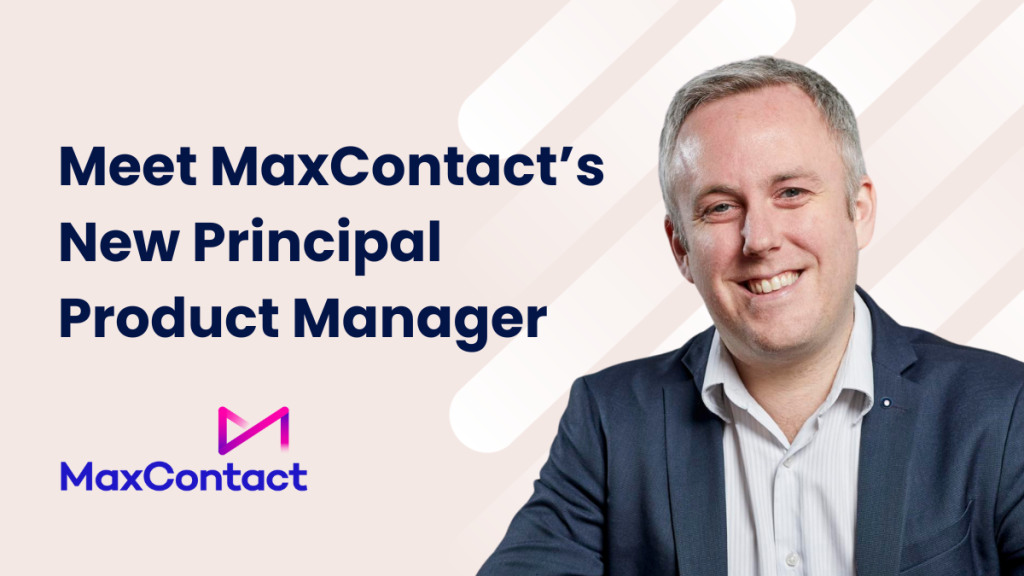
Meet Conor Bowler, Our New Principal Product Manager
We’re thrilled to announce the addition of Conor Bowler to the MaxContact team as our Principal Product Manager. With 16 years of product leadership experience across diverse technology sectors, Conor brings a wealth of knowledge in contact centre technology, financial technology, and AI-driven solutions.
A Journey Through Technology Innovation
Conor’s career path is marked by an impressive trajectory that began in engineering and development. His experience spans multiple disciplines, including professional services, pre-sales, and channel management. However, his true passion emerged in researching business challenges and collaborating with cross-functional teams to develop lasting solutions.
Throughout his career, Conor has achieved remarkable milestones, including launching a B2B product that attracted over 15,000 clients, securing patents for AI innovations, and successfully turning around products from decline to growth. His experience presenting at major industry events and managing global product portfolios across 40+ countries has given him a comprehensive understanding of the contact centre industry’s diverse needs.
Leading Spokn AI into the Future
At MaxContact, Conor will initially be taking the helm of our Spokn AI product. Spokn AI represents the future of contact centre analytics, enabling businesses to make better decisions by understanding the ‘why’ behind 100% of their contact centre conversations. This sophisticated yet user-friendly solution offers comprehensive topic analytics and sentiment analysis, providing complete clarity on business operations with insights available at the click of a button.
“MaxContact has all the ingredients for success – the people, the expertise, the vision, the empathy, and the drive. I’m eager to be part of that journey,” says Conor. His enthusiasm for the role is particularly focused on realising Spokn AI’s true potential, working closely with customers to ensure they can effectively leverage the platform for compliance monitoring and revenue optimisation.
A Vision for Growth
Conor’s approach to product management extends beyond technology alone. He emphasizes the importance of viewing products holistically – considering the processes, experiences, and people involved. His expertise in machine learning, deep learning, and SaaS solutions aligns perfectly with MaxContact’s vision for the future.
In his role, Conor aims to:
· Align MaxContact’s offerings with current market requirements
· Deliver products and services that precisely meet customer needs
· Foster positive customer experiences and references
· Develop solid product strategies for long-term market success
· Ensure a unified customer experience across all MaxContact touchpoints
We’re excited to have Conor on board and look forward to the innovative developments he’ll bring to our product portfolio. His commitment to sustainable technology innovation and creating value for clients, their consumers, and their communities aligns perfectly with MaxContact’s mission to transform contact centre operations through innovative technology solutions.
Welcome to the team, Conor!