featured
article
Fresh thinking and practical takeaways to help your business improve customer engagement and unlock better performance.

discover THE
latest articles

Making a difference at MaxContact
Before the pandemic, employees at MaxContact would meet regularly outside of the 9-5, for informal get togethers, team nights out and other social occasions. We also used to support charities together, whether that meant volunteer days or fundraising events.
Of course, all that changed a bit during the pandemic. We had virtual quizzes and distanced get togethers, but – great though these were – they weren’t the same. We realised we missed the buzz of being together, whether that was for a quick drink after work or to help fund a worthy cause.
Despite the challenges of the pandemic, the team at MaxContact doubled in size between 2020 and 2021, rocketing from 30 to 60+ employees. In other words, half our current team joined during the pandemic, which means we mostly know each other virtually.
Due to business growth and the challenges of working remotely, in 2021 we thought we’d make our informal activities official. We wanted to keep the virtual socialising going during lockdown, and then be ready with a timetable of great things to do when it ended. And so, the MaxContact Social, Charities and Culture (SCC) team was born!
Here’s what our SCC volunteers – representing every part of the business – are focused on most of all.

Getting to know you…
First off, the SCC organises all the usual stuff – drinks, team building events, and fun out of the office activities like escape rooms, as well as helping to get people together who share hobbies and interests.
And we’re determined to help everybody in the business get to know each other – not just people who work in the same teams. That’s why we’ve created social mini teams, which are made up of small groups of people from different parts of the business whose paths wouldn’t normally cross too often.
These mini teams get together from time to time for a variety of different activities, and compete in our mini team leaderboard – we love a bit of friendly competition!
SCC member Lily says: “We know socialising is a huge part of team bonding and having fun away from work, but we wanted to do it a bit differently. That’s why we came up with the idea of cross-departmental mini teams. And we’re making sure there’s a wide variety of activities to suit all tastes.”
Creating a culture
At MaxContact, we all push in the same direction. Everybody plays a crucial role in the success of the business.
We wanted to reflect and celebrate that by mixing departments (so everyone knows what everyone else does, and can understand their challenges), embedding our company values, and recognising achievements. We’re doing that through staff awards and shout outs in company updates, and in 2022 we’ll be introducing a buddy system for new starters, to help embed our values from the beginning.
SCC member Pip says: “Nurturing a positive, consistent company culture is essential, for the good of our colleagues and our clients. We want everyone to know what MaxContact stands for.”
Giving back
Through the SCC, MaxContact is supporting three charities every year, chosen by the team. We’ll support them through fundraising and volunteering. In 2022 our focus is on homeless charity Barnabus, Cancer Research and the WWF. For Barnabus, we’ve already donated food and clothing, and three team members have volunteered at the charity’s Manchester Hub. Much more is planned through the rest of the year.
Another focus in 2022 will be on sustainability and reducing our carbon footprint. We’re working on creative ways to do that now. Our role is also to promote diversity in the organisation. We’re already a diverse bunch, but we know there is more we can do.
SCC member Greg says: “As a growing organisation, we’re committed to giving something back. We’ll achieve that through a timetable of fundraising and volunteering for our chosen charities.”
The SCC
We hope that gives you a flavour of what the SCC is and what we aim to achieve. MaxContact has been through an impressive period of growth, and that means we have to work a little bit harder to make sure we all get to know each other inside and outside the office, and to promote a positive work culture. We also want to give something back.
If you’re interested in joining the MaxContact team, check out our careers page for current opportunities.
.png)
Three-quarters of customer-facing workers facing imminent burnout
Workers in customer-facing roles across the UK are facing burnout after months of being overworked and underappreciated, with no prospect of career progression.
That’s according to our new study, Customer Engagement Burnout,1 which surveyed 750 UK workers in customer-facing roles, including contact centre agents and those whose jobs regularly involve talking to customers over the phone.
Customer engagement workers play a vital role in the UK economy. The contact centre industry employs over 800,000 people, with millions more working in other roles talking to customers regularly on the phone, for example box office staff or sales professionals.
However, 72% of these workers say they are ‘burnt out’ or will be burnt out imminently, rising to 83% of those working in contact centres. As a result, the industry could be facing a similar talent crisis to the 2021 HGV driver shortage. Nearly half (49%) said they dislike their job and would be looking to move in the near future, rising to 62% of contact centre workers.
The reasons for this burnout are clear:
- 52% say their workload has increased dramatically since the beginning of the pandemic, and 43% are faced with long working hours
- 88% say the responsibilities within their existing role have expanded since the beginning of the pandemic, without a pay rise or promotion.
- On average, staff have taken on between one- and two-people’s work in addition to their own, with 10% even stretched to the capacity of three or more people.
Workers aren’t just overworked, they’re underappreciated. Nearly two thirds (63%) say their company thinks the end-customer experience is more important than employee wellbeing and 84% feel under pressure from management to deliver quantity over quality when it comes to interactions with customers.
Workers are also reporting that the support measures put in place aren’t having an impact. While just over half (54%) are aware of mental health support initiatives at their workplace, only 32% of them said their managers follow them ‘all the time’. And while 61% have some kind of specialist customer engagement technology to help them do their job, this is much more common in contact centres and is having limited impact on job satisfaction.
We’re calling for a commitment from industry leaders to make 2022 the year of the agent by transforming working practices to put the wellbeing of frontline customer service staff on the same footing as customer satisfaction.
Ben Booth, CEO of MaxContact, said: “For those on the phone to customers every day, two years of working alone at the kitchen table, mounting workloads and little interaction with colleagues has taken its toll. People are telling us that they’re feeling overworked, under supported and aren’t hopeful that things are likely to change. Many are considering leaving their job, and even the industry, altogether.
“We need to make a change and fix the balance between customer satisfaction levels and investment in staff wellbeing.
“That’s why we’re making 2022 the year of the agent. While it’s down to each organisation to provide employees with competitive salaries, benefits and career progression opportunities to make these jobs attractive, we believe every part of the industry has a role to play.
“For us, this means putting workers’ wellbeing – the end-user of our platform – at the heart of everything we do. We’re making sure technology is actually helping staff, including reducing time spent on menial, repetitive tasks, increasing efficiencies of people and making it simple and easy to deliver great interactions with customers so they feel good about their work – without unnecessary stress.
“Those working in customer-facing roles are the hidden backbone of society – we need to make sure that we’re repaying their commitment with the support they deserve.”
- MaxContact commissioned independent market research company, Censuswide, to survey a nationally representative sample of 752 workers employed in customer-facing roles, with 250 respondents that work in contact centres, and 502 respondents who speak to customers every day on the phone. The poll was conducted between 19th and 26th November 2021. Unless stated otherwise, all figures were drawn from this poll.

Why choosing a small ISV makes perfect business sense
In the 1970s, big players in the burgeoning computer industry coined the phrase FUD.
It stands for Fear, Uncertainty and Doubt, and it’s what behemoths like IBM tried to sow in the minds of customers in relation to plucky young upstarts like Microsoft and Apple.
It’s fair to say that the FUD strategy didn’t work too well in that particular instance, but it’s still used today whenever a large enterprise wants to scare customers away from a smaller and often more nimble competitor.
FUD for thought
It’s easy to see FUD’s appeal. When an agile new company comes into the market with new ideas and innovations, it can be hard to argue with their technology, which is often leading edge.
So FUD attacks ignore the product, and focus on the business. Will a smaller Independent Software Vendor (ISV) have the resources to support your solution? If they’re not widely known, can you even trust them? Will they even be in business a year or two down the line?
Get your FUD attack right and the flipside hardly needs to be mentioned because it’s staring everyone in the face. With a big, long-established market leader you get security, longevity and a safe pair of hands.
The FUD attack works because nobody ever got fired for taking the safe option.
The problem is that the safe option is often the wrong option for businesses (small or large) that want the best technology combined with the best support.
ISV vs enterprise
MaxContact is an ISV, and we come across the “small supplier” problem a lot. A potential customer will ask why they should go with us over a big name contact centre supplier like Cisco or Avaya. Isn’t it safer to go with the big behomoths?
In response, we ask them why they think a large provider is better for them, and respond on a point by point basis. It tends to go something like this…
Customer: A bigger supplier will have more resources
MaxContact: They will, but most of those resources will be pointed at large enterprise clients. A common complaint from customers who eventually make their way to MaxContact is that they were forgotten by the large players. For small and medium sized businesses using enterprise providers, it can be difficult to even get an engineer on the phone.
That’s because enterprise providers are focused on enterprise customers. Or as one of our customers put it, after leaving a multinational supplier for MaxContact: “At 250 seats we thought we were big enough to have some influence, but we came to realise that we were little more than a rounding error on the provider’s P&L.”
C: A bigger supplier will have more and better skilled staff
MC: It will certainly have more staff, but SMBs are likely to spend most of their time in conversation with non-specialist support staff with limited technical knowledge.
The right technical people definitely exist, but getting to them can be a time-consuming and frustrating undertaking, especially for smaller businesses. In large providers, departments are siloed and staff roles have strict limitations. The person you’re talking to is likely to be competent in their area of work and no other.
By contrast, your small business isn’t an afterthought to an ISV. If you have an issue, you’ll get to the right people straight away. Every employee at MaxContact is aware that, when your organisation wins more business and adds more seats, we win too. We have a vested interest in your success.
As to skills, with an ISV you’ll be dealing with people who are closer to the heart of the business, who have an in-depth knowledge of the entire organisation. If they need an extra pair of eyes on your problem, they’ll call in an individual, not pass you on to a different department. It means issues get sorted more quickly and more completely.
And at least in MaxContact’s case, at the top of the business you’ll find industry specialists with long experience in contact centre software, who are still actively involved in the development of the solution. If you want to talk to one of us, just pick up the phone.
C: A smaller provider might get bought out
MC: While that’s true, it’s also unlikely to affect the customer experience. Businesses get bought because they’re successful, and why change a winning formula? It’s also the case – as with MaxContact – that when specialist investors take a stake in a company they bring business nous, but are happy to leave product development and customer service to the people who do it best.
And things can change just as easily at large providers, especially when shareholders want better returns. For example, one enterprise recently outsourced its entire first line support services to Romania. It’s a move that will look good on the balance sheet but might not seem such a great idea to an SME with a system outage.
C: Large providers listen to their customers more
MC: In reality, the opposite is true. When you deal with an ISV, you’re dealing with the people who make the product. We’re agile enough to listen to what you have to say and take suggestions on board. In effect, your feedback becomes part of our product roadmap.
When you go with a large provider, in many cases you won’t be dealing with them directly at all. Instead you’ll be dealing with a reseller that operates its own support team and is several steps removed from the development of the software. You can feedback all you like, but the team that develops your solution will likely remain entirely ignorant of your existence.
The takeaway
The takeaway here is that while nobody should be fired for choosing the safe option, nor should they be promoted for missing out on a solution that is a better fit for their business.
Innovation in contact centre software is often concentrated in ISVs where industry expertise still permeates from top to bottom. These businesses build great relationships with customers, go the extra mile, and strive to create mutual success, because it’s in their interests to do so. In an enterprise environment, SMBs are too easily ignored. Organisations that feel undervalued by their provider should remember that great things really do come in small packages.
MaxContact is a cloud contact centre solution provider, offering predictive outbound dialling and PCI-compliant omnichannel solutions built around your needs. Find out more about us. predictive outbound dialling and PCI-compliant omnichannel solutions built around your needs. Find out more about us.
How to improve call centre staff retention
For contact centres, retaining top talent is the key to hitting performance targets. It’s no secret that high turnover rates can lead to poor efficiency, customer complaints and increased operational costs.
So, how can you combat this challenge? Well, staff retention can be tricky but there are some effective strategies you can implement to encourage a positive and supportive work environment.
What is the state of play in contact centres?
According to our latest Benchmarking Report, the average turnover in call centres is 30.2%. But before we dive straight into retention strategies, let’s take a moment to understand the factors that contribute to high turnover in contact centres.
- Increased Workloads: 42.0% of call centres are experiencing a surge in agent workloads, which will eventually lead to burnout and job dissatisfaction.
- Lack of Reward: Despite higher workloads and the cost of living crisis, 56% of agents have not received a salary increase. Underpaid staff negatively impacts job satisfaction and motivation.
- Lack of Career Growth: Feedback and training are essential for performance growth and provide agents with opportunities for advancement. However, 22% of contact leaders share coaching tips just once a month.
Without the right call centre staff retention strategies in place, call agent turnover will increase. So what strategies should call centre managers implement?
It starts with onboarding
Onboarding really does matter when it comes to reducing staff churn. Failing to welcome staff effectively and prepare them for their first weeks on the job is hugely costly.
Have a structured onboarding plan
Make sure you have an onboarding plan that makes full use of their time. Leaving new starters twiddling their thumbs or unsure of what they should be doing next is not a good first impression. It smacks of a lack of organisation.
- Share essential company information
Before you get to the role-specific stuff, give them the essential business information they need. Show them where to get a cup of coffee, and where to turn for help when they’re locked out of the company intranet. Let them know of any perks the company offers, and how to claim them.
Help new-starters to network
Introduce new starters to key contacts and consider assigning a mentor for support. Make sure you give new starters the opportunity to get to know the people they’ll be working with.
Provide them with the right equipment
Make sure new employees have the right equipment and set up. Don’t forget to consider their needs based on their working agreement – are they office based, hybrid or fully remote?
Have a role-specific training plan
An onboarding programme should prepare new call agents for their specific role. It needs to be thorough, with time for questions and feedback. It’s important for new contact centre staff to feel confident about handling live interactions with customers, so incorporate mock calls and role plays.
Provide training on contact centre features
The best contact centre software is intuitive to use. But ongoing training is essential as new features are introduced. Start with basic functions and progress through more advanced features. At Maxcontact, we offer full training for our clients and their teams, for free, forever.
Create a positive work environment to reduce staff churn in your call centre
Even if you nail the onboarding process, there are still plenty of strategies you can put in place to make sure your workforce stays motivated and your call centre is a happy environment.
Prioritise the well-being of your staff
Investing in employee well-being is essential for a thriving contact centre. Here are some processes you can put in place to prioritise employee engagement and reduce burnout.
- Organise regular one-to-one chats and make yourself available for impromptu meetings.
- Measure satisfaction and engagement levels with surveys and questionnaires.
- Organise team social events to blow off steam.
- Train mental health champions and give employees access to wellbeing resources.
- Encourage a switch-off culture: employees should disconnect from work at the end of every shift.
NOTE: Even with all this in place it’s important to spot signs of staff disengagement and intervene early.
Pay attention to your recruitment strategy
It’s inevitable that employees will eventually move on. But it’s important to have a recruitment process in place so you can keep staffing levels up. If you’re understaffed, workloads increase and this leads to burnout.
But recruitment strategy doesn’t just apply to replacing staff – it’s much broader than that.
- Attract top talent through effective recruitment channels, including social media, job boards and employee referrals.
- Invest in talent development programs to identify and nurture high-potential employees within your organisation.
- Create clear career paths and progression opportunities to motivate agents and retain them long-term.
Prioritise continual learning
Agents are less likely to burn out if they’re confident in what they do. Well trained staff are less likely to feel overwhelmed. So provide your team with specific training and schedule regular feedback sessions.
Invest in the right technology
Investing in the right contact centre software and technology can ease workloads and increase job satisfaction. Software such as intelligent diallers can reduce manual labour, while self-serve IVR payments can reduce customer contact and free up staff time for more complex calls. Meanwhile, good scripting and on-call coaching can help agents deal with difficult situations.
Offer them a career path
Make sure every agent knows how far ahead the next step on the career ladder might be, and what they need to do to reach it.
It might be achieving better monthly figures, taking extra training or just making gradual improvements over time. If an agent can see a route to greater responsibility and better rewards, they’ll be more likely to stay with your company. If they feel trapped at their current level, they’ll be more likely to leave.
Some agents may show little interest in promotion; the job is a stopgap. That’s fine, as long as they do the job satisfactorily. But focus more time and resources on those agents that clearly see a future with your business.
By implementing these processes, contact centres can significantly reduce staff turnover rates and create a positive work environment. By prioritising employee retention and keeping their staff motivated, call centres can improve customer satisfaction and operational efficiency.
.png)
The balancing act: Increase your contact centre productivity and stay compliant
Sports coaches talk about marginal gains, and how lots of small changes can add up to the difference between winning and losing in a tight contest. But if Gareth Southgate found a new strategy that would boost his team’s performance by 200-300%, he’d jump at the chance.
That’s the level of improvement delivered by outbound dialling software over manual dialling. Like any good team performance though, it’s about getting the right balance right, in this case between reaching new targets and remaining compliant with Ofcom regulations.
Increased productivity of automated dialling
Automated dialling vs. manual dialling
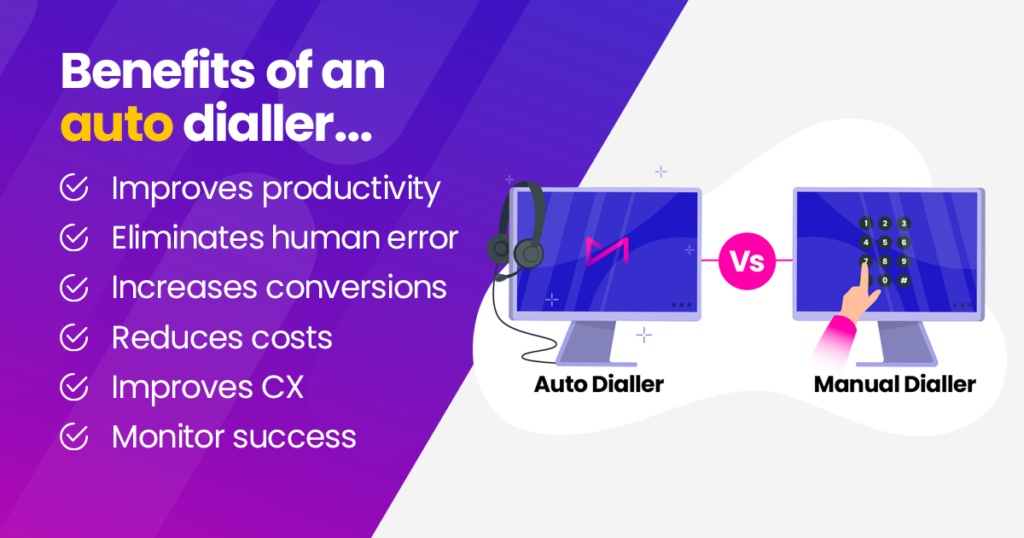
A manual dialler is like a traditional phone. An agent manually dials numbers from a call list, one after another. Whereas an auto dialler, as the name suggests, automates much of the dialling process. It digitally dials numbers, and can also dial multiple numbers at once, passing answered calls to available agents.
Most call centres opt for auto dialling because it significantly boosts productivity, eliminates human error and allows agents to spend more time talking to customers and less time dialling.
Spend 2–3 times longer speaking to people with automated dialling
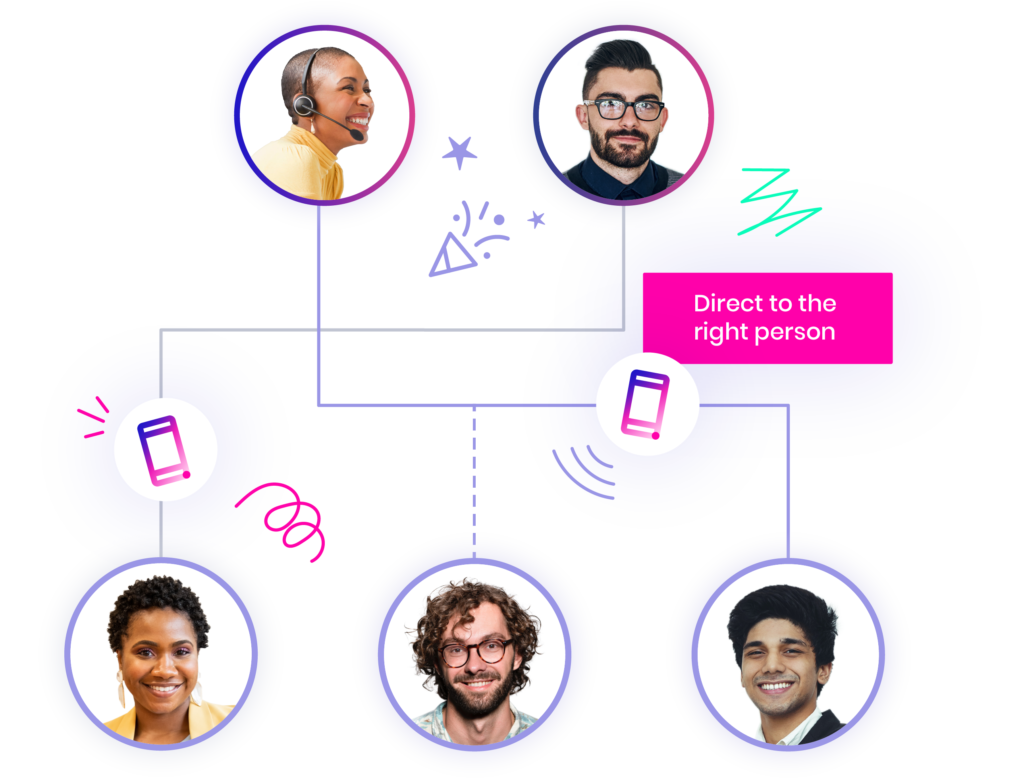
Where does this productivity leap come from?
Some of the productivity gains from dialler software are built on predictive dialling, in which calls are placed at a rate the dialler expects agents to become free from their previous conversation. Calculating this rate is done by the predictive algorithm.
Predictive dialling is supported by two further modes, progressive and preview dialling. In progressive mode, the dialler waits to make the call until the agent becomes free, rather than estimating that time in advance. Preview dialling allows the agent to review information about the contact before the call is made.
All three dialler modes have a role to play, and getting the right combination means agents typically spend two to three times longer actually talking to clients, and so meeting the overall aims of the business, than if they were managing their own calls manually.
Compliance myths in the contact centre industry
In order to get compliance right, the first step is separating facts from myths. There are two persistent compliance myths in the call centre industry.
Myth 1: Ofcom specifies a target of 3% for dropped calls.
Some software diallers might even be calibrated to produce 3% dropped calls and claim this is compliance.
This is not the case. Ofcom wants to see 0% dropped calls, and a contact centre operator needs to demonstrate they are doing everything they can to achieve that. The 3% figure is a benchmark. It means that so long as an operator is doing all they can to minimise dropped calls, Ofcom accepts that mistakes can and will happen.
Myth 2: A dropped call number cannot be rung again within 72 hours.
Wrong again. What matters is that an agent must be on hand if the call is answered.
Explore our no-nonsense guide to all current Ofcom regulations >
Real world conditions that lead to dropped or silent calls

In a perfect world, a predictive dialler would make outbound calls at a rate that always exactly matched the agents available to connect to clients. But it’s never that simple. Instead, let’s run through some of the ways outbound dialling can get out of sync, and ask what the consequences are.
The most obvious way is that agents are people. They log in and out unexpectedly. They have to go for meals and comfort breaks.
Then there are blended environments. Agents taking inbound calls means that they aren’t available for outbound calls, and so the predictive algorithm gets the rate of outbound calls wrong. Blended environments are like a football match against Brazil. They’re always going to be tough.
In effect, there’s always the risk of an avoidable own goal, which simply means making too many outbound calls when there aren’t enough agents available to cope.
Dropped Calls
All of these real world conditions can lead to dropped calls. And dropped calls aren’t the only compliance challenge. Redialling the same number too soon after a dropped call can be an issue if not handled properly. As is repeatedly dialling a number that has asked not to be called.
Silent Calls
Then there are silent calls. A silent call is when answer machine detection (AMD) registers a false positive, meaning a person answers but the dialler software thinks it’s an answer machine and hangs up.
“For some people – for example, those living alone – these calls can be particularly frightening,” says Ofcom.
The penalty for getting compliance wrong
Ofcom has fined several call centres over the years for various violations, including making nuisance calls, breaching regulations regarding silent and abandoned calls, and failing to provide proper customer service. The fines can vary widely depending on the severity of the violations.
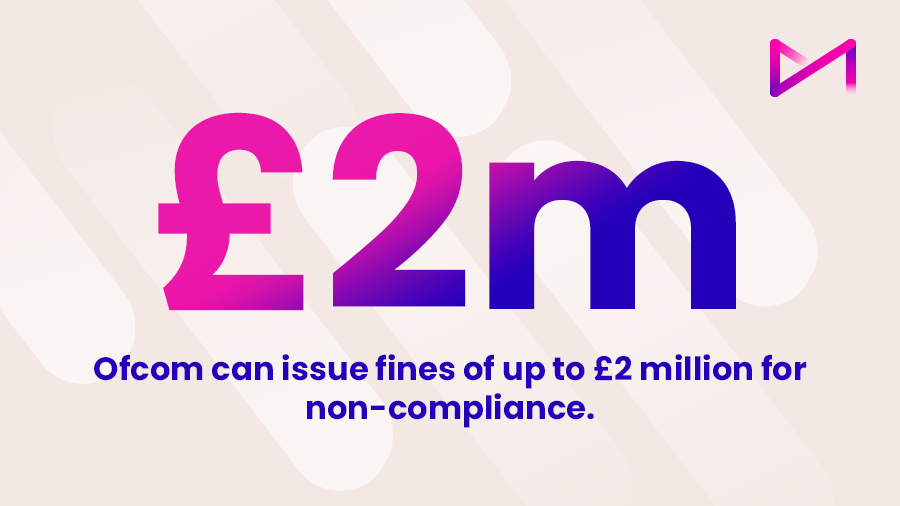
Back in 2013, TalkTalk was fined £750,000 after the company swamped potential customers with silent calls and Barclaycard has received a £50,000 fine. For repeat offenders, it can mean a potential fine of up to £2 million!
The good news is that, according to Ofcom statistics, the average number of nuisance calls – including silent and abandoned calls – reported by consumers who received them, is at its lowest point ever.
- Over the last six years, the number of complaints Ofcom has received related to silent and abandoned has decreased by 65%.
- In 2022, Ofcom received a total of 15,186 complaints related to these calls, compared to 42,822 in 2016.
Data Source: Enforcement programme into silent and abandoned calls
How to balance agent productivity and compliance?
A dialler software solution that can deliver outstanding productivity gains without putting compliance at risk will have a checklist of key features.
- It should head off the causes of dropped calls before they happen. That means agents have to request their next action, such as logging off. Given this information, the predictive dialler can adjust its outbound call rates to match.
- In blended environments, the predictive algorithm has to allow for inbound calls.
- The dialler should move seamlessly from predictive to progressive dialling at times when there are fewer agents, for example during lunch breaks.
- When recalling numbers within 72 hours, the dialler should switch to preview mode so that an agent is guaranteed to be available if the call gets through.
- It should eliminate silent calls due to AMD by passing the call to an agent if there is any doubt, and should leave a message in any circumstances where a call isn’t picked up, completely avoiding any silent calls.
- Finally, the dialler software should automatically integrate and update Do Not Call lists, and allow clients to add themselves to the list.
The most compliant dialler will always be the most productive
Contact centres need to do all they can to avoid falling foul of these rules, and potentially taking significant financial and reputational damage.
MaxContact has 25 years experience performing at the highest level across all forms of contact centres. We understand compliance because we help to define the standards through involvement in Ofcom consultations around persistent misuse of software diallers.
Book a customised demo today to learn about our dialler software and ask us any questions about compliance in your contact centre.
How to serve vulnerable customers
As the cost of living crisis continues and bills continue to soar, contact centres are facing an increase in vulnerable customers who are seeking support. Now more than ever, it’s crucial that these customers are able to easily receive the correct support and that contact centre teams are prepared for potentially difficult and distressing conversations.
Accessing adequate customer service is vital, especially during the cost of living crisis.
Being on the frontline of organisations, contact centre advisors see and hear the impact this is having on customers first. It’s important that agents have the right tools in place to effectively support vulnerable customers during these tough times without jeopardising their own wellbeing.
Identifying vulnerable customers
The FCA recently widened its definition of a vulnerable customer. While it includes more commonly known groups, such as the elderly and those with certain health conditions. It now also includes individuals that are sometimes more difficult to identify, like people with addictions, those who need care from others and those with low financial resilience.
That’s particularly important when you consider that, as the FCA survey shows, many more people have found themselves financially vulnerable, with a 15% rise in people feeling financially vulnerable since the start of the pandemic.

At the same time, the increase in the number of vulnerable people creates additional workload for companies that have a duty to identify them in their own customer base and during any sales process.
That’s important for businesses to know, but the fact is that it’s not always easy to identify vulnerable people from basic information provided on a form, or even during a phone call.
Despite recent progress, customers can sometimes still feel stigma around mental health, poverty and poor literacy levels. In fact, customers may be reluctant to bring up a host of issues that would identify them as vulnerable to your agents.
[Watch] How to identify and best serve your vulnerable customers in your contact centre >
Insights from our research
We recently worked on a comprehensive piece of research where we surveyed 1000 vulnerable UK people who’d had recent interactions with customer service support.
At a glance, we found that:
- 45% have struggled to get through to the right person or department when contacting customer service.
- 51% have been passed between different agents and had to re-explain their problem several times.
- 30% of respondents said that their finances were negatively impacted by the inability to contact a company’s customer service.
- 27% feel their needs are not being accommodated by customer service staff.
- 30% feel as though advisors are trying to get them off the phone quickly.
5 ways you can help vulnerable customers achieve good outcomes
In this guide, we share five practical ways your contact centre can support vulnerable customers during the cost of living crisis and beyond.

1. Learn from best practice – even if your sector is unregulated
As customer concerns rise, even those in unregulated sectors could face an influx of more challenging calls so it’s important that all businesses are prepared and know the best practices in order to support vulnerable customers through the tough times ahead.
Can you easily scale your support for vulnerable customers?
- There are currently 27.7 million vulnerable customers in the UK but this number is set to grow. Greater support will be needed from firms as the number of customers facing hardship rises.
- If all staff aren’t trained to deal with vulnerable customers, make sure they are able to spot signs that a customer is struggling and know the appropriate colleagues to pass them on to for support.
- Consider training wider agent teams so they can handle vulnerable customers and ensure teams have support when things get really busy, including breaks from emotionally intense work.
Utilise scripting – but cut canned responses
- Consider holding back from sending canned responses for these customers as they can easily be misconstrued and seem uncaring. Personalised responses are more appropriate for vulnerable customers as they may need more detail or clarity on discussion points.
- Instead, having a scripting guide for teams to follow gives them confidence and makes sure they are prepared for any jarring questions. It also makes sure customers feel valued and reassured that the company is doing the right thing
Check out our guide to writing effective scripts >
Always follow up on what is discussed with the customer
- For example, share affordability statements and plans via links in email or SMS and emphasise the purpose of this communication is to make sure that you come to a solution that is right for both the business and customer and to eliminate any repeat conversations in the future.
- This empowers the customer to feel they understand what is being asked of them and why and encourages an honest response.
2. Stay compliant with the FCA’s new Consumer Duty guidance
The current economic climate means that it’s crucial that customers are able to make good financial decisions. Our research shows that current customer service needs to improve to ensure vulnerable customers feel supported; 27% feel their needs are not being accommodated by customer service staff.
The FCA’s new Consumer Duty guidance will not only set higher and clearer standards of consumer protection across financial services, but it will also require firms to put their customers’ needs first and provide clear communication and support.
Are your team trained to spot those in financial difficulty?
- Due to the cost of living crisis, this group will become much larger – putting even more pressure on teams.
- Make sure teams aren’t just dealing with the request in front of them but are also thinking about the customer as a whole. For example, forecasting cash flow issues to ensure someone can pay for something in future and working that into customer support conversations.
Are customers having to repeat themselves?
- It can be difficult for customers to open up to an agent, so being transferred and repeating themselves to multiple agents can stress out vulnerable customers.
- Make sure call information is captured in one system so different departments and agents have one version of truth.
Is your customer support proactive?
- Instead of waiting for customers to come to you, proactively contact customers who may be dissatisfied or having problems.
- Unexpectedly calling or messaging shows customers you are honest and upfront, reassuring them that something is being done and you care.
- For example, check in with customers before their next bill even if it’s just a WhatsApp, email or text message to inform them the next payment is coming up and ask if everything is ok, if they can meet this payment or if they need to have a conversation around payment – this is helpful support for people who have habitual struggles with payment.
3. Get the right tech in place
Leveraging technology allows agents to spot trends in customer conversations and enhances training and coaching, allowing staff to make more informed decisions when supporting customers.
Have you got interactive scripting guides for teams to follow?
- Having scripts and guides within your software can help agents to lead the conversation, but it’s important it doesn’t become a “one size fits all” templated response. Include information on where agents can point customers to if escalation is needed e.g. relevant charity support.
- Let agents know the areas where they can / can’t help, and where their role ends.
Do you offer the right communication channels?
- Different customers have different needs and preferences – offer phone, text, email, webchat.
- Phone lines are still vital – 50% of those aged 75+ have no online access.
- People might also find it easier to open up on webchat/SMS as they can share their difficulties without feeling as if they’re being judged. However, you miss verbal cues and tone – so teams need to be careful in how they respond and make sure this is interpreted correctly.
- Being able to write down thoughts in an email can also allow customers to methodically structure what they want to say and gives agents time to read and digest the information, as well as keep some emotional distance.
- Even if conversations start in text form, it’s important to try to get that person onto a phone call as quickly as possible where nuance and tone can be captured.
Do you have speech analytics in place?
- A modern speech analytics platform doesn’t just capture the words spoken, it can capture HOW they are spoken. For example, highlighting uncertainty in a customer response.
- The software automatically identifies these potentially vulnerable customers so that the business can track them and take further action if necessary.
Discover how speech analytics can turn conversation into insights here >
4. Support front-line staff who are dealing with calls
Nearly three-quarters (72%) customer-facing staff say they’re burnt out or facing burnout due to increased workload. And for those speaking to vulnerable customers this pressure is even greater – which is why supporting staff is key to supporting vulnerable customers.
Image stat, text: 72% of customer-facing staff say they’re burnt out or facing burnout
Can you instantly access call recordings?
- If an agent has a difficult call, team leaders should be able to instantly access call recordings to make sure they have all the information they need to empathise and support agents when they ask for support.
- But it’s not just calls. Live monitoring of conversations across SMS, web chat and email allows leaders to provide actionable feedback and coaching to teams and individuals.
Do you have peer support groups?
- Give agents self-learning time where they can gather to vent and discuss how to deal with difficult calls. For example, accessing historical recordings and chats, listening to and analysing previous conversations together and reviewing best practices.
- Allow team leaders to listen in and understand the challenges staff face, especially in a remote environment.
Are the right agents dealing with the right calls?
- Back-to-back calls with distressing situations can really take their toll – especially if the right people haven’t received extensive training in that area.
- Giving the right conversations to the right agents means they can handle calls more effectively and feel confident in their job.
Are managers live tracking sentiment?
- Allowing team leaders to listen into calls can help with QA, but also allows you to identify agents who need extra guidance.
- Live-tracking call sentiment allows them to pinpoint which calls, customers and agents need the most support.
5. Don’t let support become counselling
The cost of living crisis has led to a surge in customers seeking support and reassurance, but it’s important to remember that agents aren’t counsellors and shouldn’t be taking on the additional emotional burden. Agents who are dealing with upsetting calls need to be supported and clear on the areas where they can provide support and where to signpost vulnerable customers for extra help.
Do agents know where their role ends?
- Calls with vulnerable customers can be very emotionally charged and agents often want to do everything they can to help.
- Ensure guides and scripts explain where their role ends and when they should flag to a supervisor or charity who are better qualified to help.
- This creates better outcomes for both agents and customers.
Are people getting breaks between difficult calls?
- The last thing you want is agents feeling horrific after a bad call – make sure that they feel supported.
- Allow them to have 5-10 mins breaks after distressing calls so they can recap, regroup and rethink – getting them into the right mindset for the next customer.
Do you have break clauses in place?
- Once people open up about an issue, a customer service agent might be the first person they’ve spoken to about it – and you can’t stop them in mid flow.
- Supervisor / managers need to put rules in place to catch this. For example, if a call is longer than 30mins, managers should check in to see whether the agent needs help, and be on hand to support that agent if they’re dealing with an emotionally draining situation.
- Especially working remotely, managers can make sure that person gets a break after a particularly demanding call, or can speak to a mental-health advisor.
Improve the outcomes for distressed and vulnerable customers
Now more than ever, you need to ensure that distressed and vulnerable customers can receive the right support from your contact centre teams. While making sure your agents and advisors have the right training and tools to deal with those potentially difficult and distressing conversations.
Book a customised demo to learn how our contact centre software can help your contact centre teams serve vulnerable customers more effectively.